Specific concern
One symptom, one question, one decision — you describe it, we tell you whether it's worth a clinic visit.
Start a case →Receive expert ophthalmology advice online from our European-trained eye doctors.
Online consultation
Is not suitable for an urgent problem
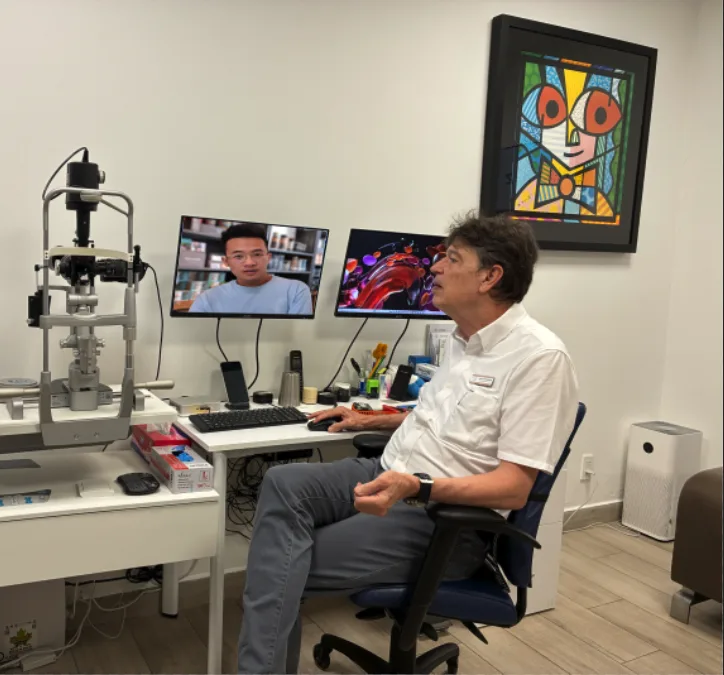
Five short steps. Each one is set up so the call itself is spent on your eyes, not on logistics.
The online consultation can be arranged through a straightforward video platform such as Zoom or Google Meet. After your booking is confirmed, you will receive a meeting link and instructions in advance.
Choose a 20-minute or 40-minute appointment based on the level of discussion you need.
Tell us what you want to discuss, your symptoms or diagnosis, and the time zone you are in.
Previous eye examinations and medical reports are required in advance, particularly for second opinions.
Consultations are confirmed after advance payment has been received.
Receive expert advice, a review of your case, and practical recommendations for next steps.
An online consultation can lead to a personalized treatment plan, a recommendation for a specialist in-clinic consultation, further diagnostic testing, or a clear second opinion on the best next steps.
Most online consults end with one of three answers: come in, hold off, or do nothing yet. Each is a useful conclusion. The point of the call is to spare you the wrong trip and to find you the right one.
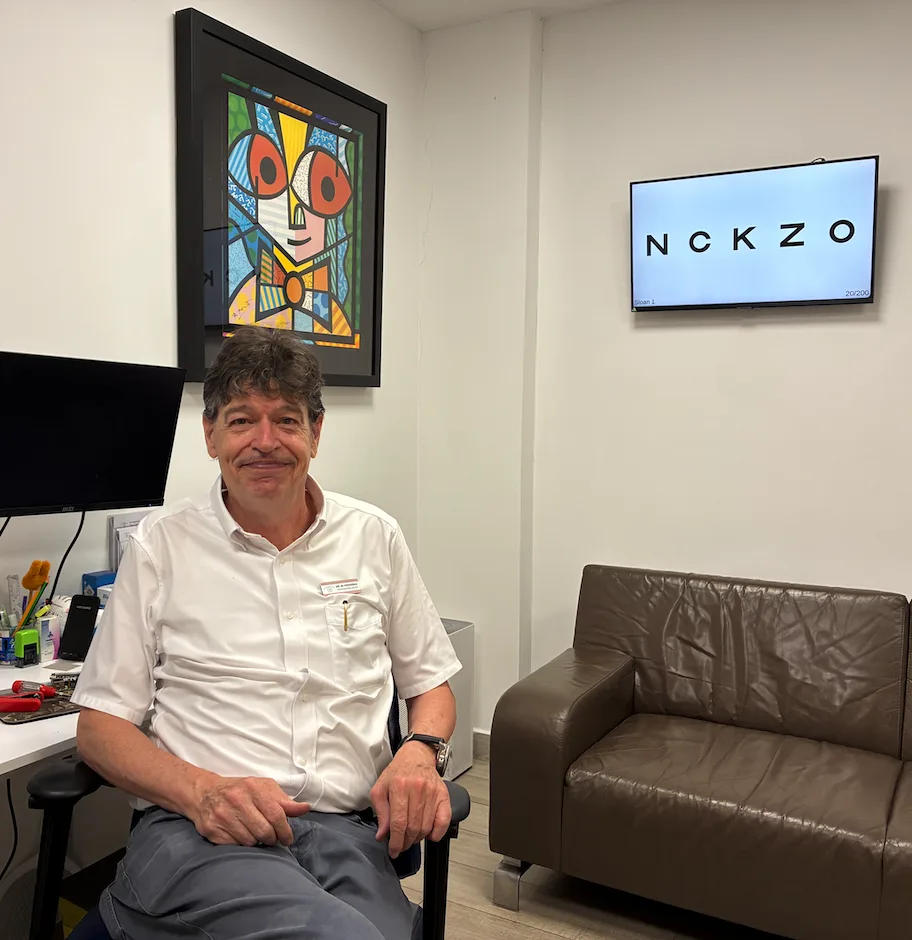
Dr. JD Ferwerda, MD · Lead Ophthalmologist
One symptom, one question, one decision — you describe it, we tell you whether it's worth a clinic visit.
Start a case →Send your imaging and the proposed treatment. We review and tell you whether we'd suggest the same plan.
Start a case →Considering surgery and want a second pair of eyes on the plan? Share the imaging, ask the questions, then decide.
Start a case →Recovering from a procedure elsewhere and unsure whether something is normal? We'll review the timeline and the imaging.
Start a case →If clinic-time makes sense, we help shape the trip — arrival, the visit window, recovery, and the flight home.
Read more →A short guided form — a few minutes. Attach any imaging or reports you have and we'll come back to you with a plan and a slot. Everything you share is treated as clinical information.
Common reasons for booking include blepharitis, dry eye disease, recurring chalazion, recurring corneal erosion, glaucoma, age-related macular degeneration, retina problems, diabetic eye disease, refractive surgery information, general eye surgery advice, and myopia control.
For international patients →We can't measure intraocular pressure remotely or do a slit lamp exam. We'll always tell you what's reliable from the call and what would need to be checked in person.
Whatever imaging and reports you have: OCT scans, topography, biometry, fundus photographs, recent prescriptions, and any letters from previous clinicians. Higher-resolution PDFs or original DICOM files are better than phone photos of the screen. Our team reviews and indexes everything before the call so the time on screen is spent on the discussion, not the paperwork.
You can choose between a 20- or 40-minute call, scheduled to your time zone.
English by default. We can also conduct calls in Russian, Dutch, or Spanish. Tell us your preference at booking, and we'll match the right doctor and support.
The travel coordinator picks up where the call ends. They help with timing, scheduling the clinic visits, any procedures, and all follow-up appointments. Hotel suggestions are based on proximity to the clinic.