
Lead Ophthalmologist · Cataract and Retina Surgeon
Dr. JD Ferwerda, MD
Dr. JD Ferwerda, MD: Dutch-trained ophthalmologist specialising in cataracts, lens exchange, retinal disease, glaucoma, and AMD.
Floaters are tiny shapes that drift across your vision and are most visible against a bright sky or a pale wall. Often harmless and age-related, but sometimes the first warning sign of a retinal tear or detachment that needs treatment urgently.

Floaters can look like small specks, threads, or cobwebs drifting across your vision. Flashes can appear as brief streaks or flickers of light.
Small specks, threads or cobwebs drifting across your vision
Floaters often stand out against a bright sky or pale wall
Brief flashes at the edge of your vision
Flashes may be more noticeable in dim light
A sudden shower of new floaters
A dark curtain, shadow, or missing area of vision
The first priority is to rule out a retinal tear or detachment. New floaters and flashes may result from a harmless vitreous change, but symptoms alone cannot reliably distinguish this from a retinal problem. A careful dilated examination allows us to inspect the retina, including the far periphery where small tears may occur.
We examine the retina through a dilated pupil to look for retinal tears, holes or detachment.
The far edges of the retina are checked carefully, as this is where small tears
can occur.
OCT provides detailed cross-sectional images of the macula when central retinal structures need closer assessment.
If blood or dense floaters block the view, ultrasound can help assess the retina and vitreous.
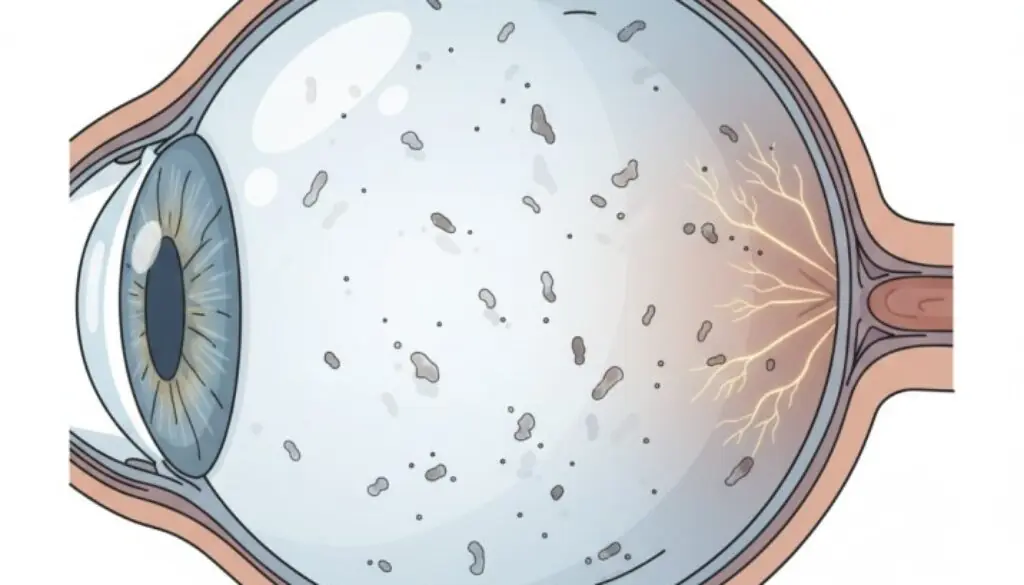
Most long-standing floaters are harmless. But new or suddenly increased floaters and flashes can mean the vitreous is pulling on the retina — and in some cases may signal a retinal tear or retinal detachment.
A retinal tear can sometimes progress to retinal detachment. Early assessment helps protect vision and determines whether urgent treatment is needed.
Dr. JD Ferwerda, MD: Dutch-trained ophthalmologist specialising in cataracts, lens exchange, retinal disease, glaucoma, and AMD.