Astigmatism
Detection of irregular corneal curvature that distorts vision in children — corrected early to prevent lifelong blur and visual delay.
Read more →Children grow into their vision, and most problems are easiest to solve when they're caught early. Our pediatric care covers everything from premature-baby retinal screening to school-age refraction and ongoing myopia management — in rooms that feel calm and at a pace the child sets.
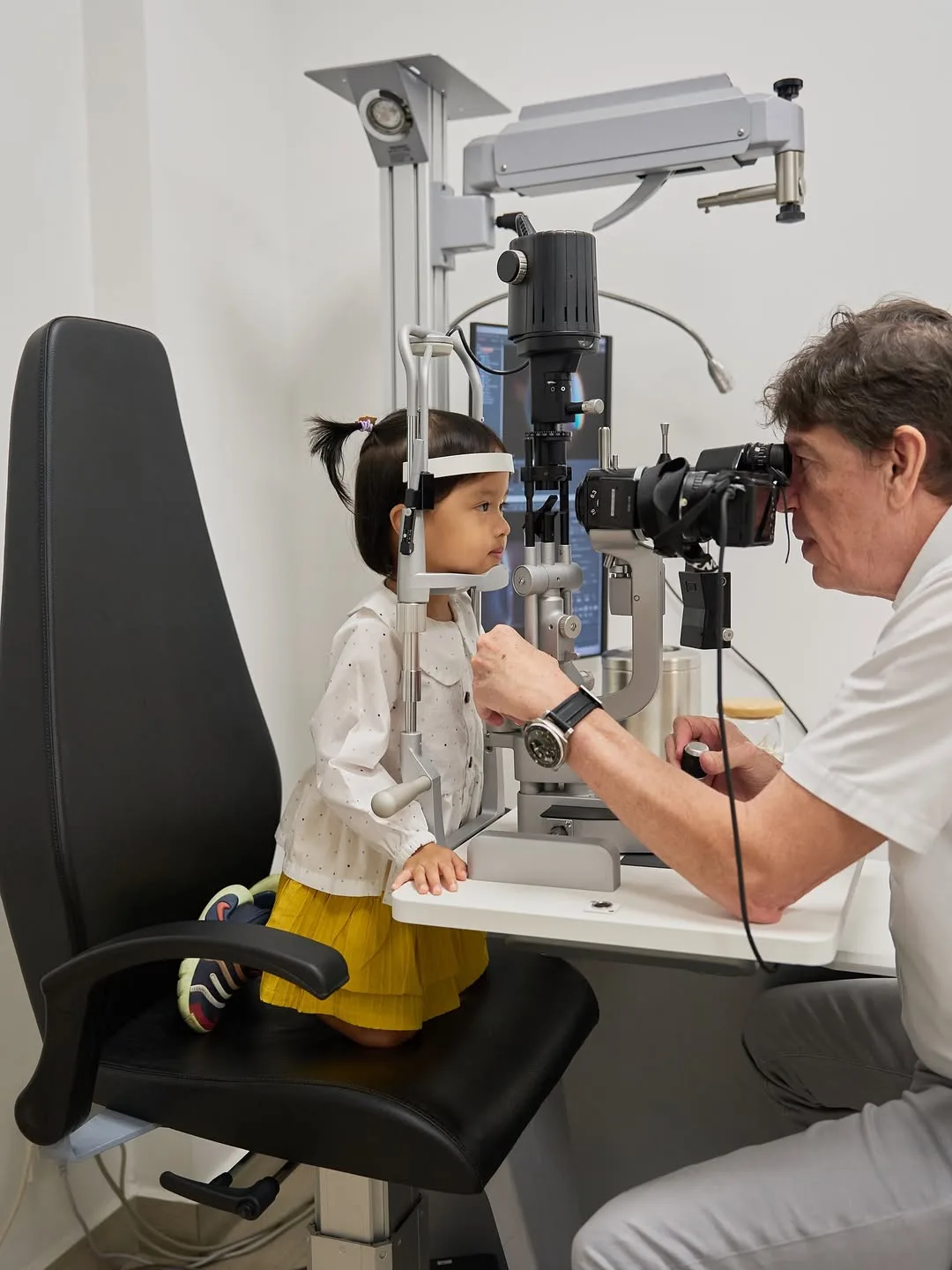
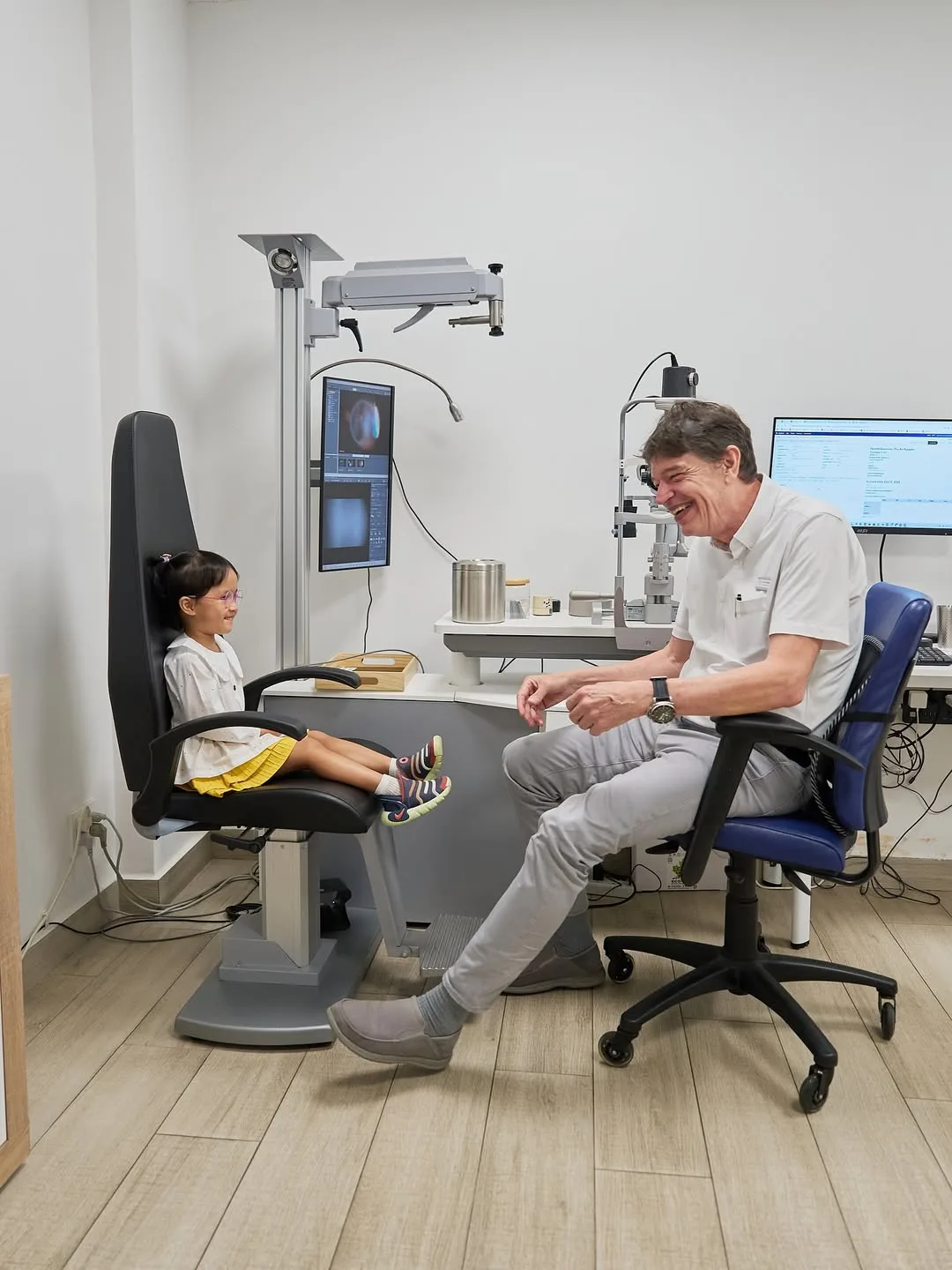
Children's eyes change quickly, and they don't always sit still. Pediatric eye care needs different rooms, different tools, and a different pace. Here is what that looks like in practice.
Soft lighting, low chairs, no rush. The exam moves at the speed your child gives us, not the speed a clock demands.
Drops that relax the focusing muscle so the true prescription can be measured. Essential in children, often skipped elsewhere.
A key measurement for tracking myopia progression in children. We chart it visit by visit so the trajectory is visible.
Through the exam, the conversation, and the discussion of findings. You see what we see, and you hear it from us first.
Picture charts for the youngest, letters for older children, behavioural observation for toddlers. The test fits the age.
Retinopathy of prematurity is assessed by a specialist with decades of ROP screening experience, with the equipment to do it properly.
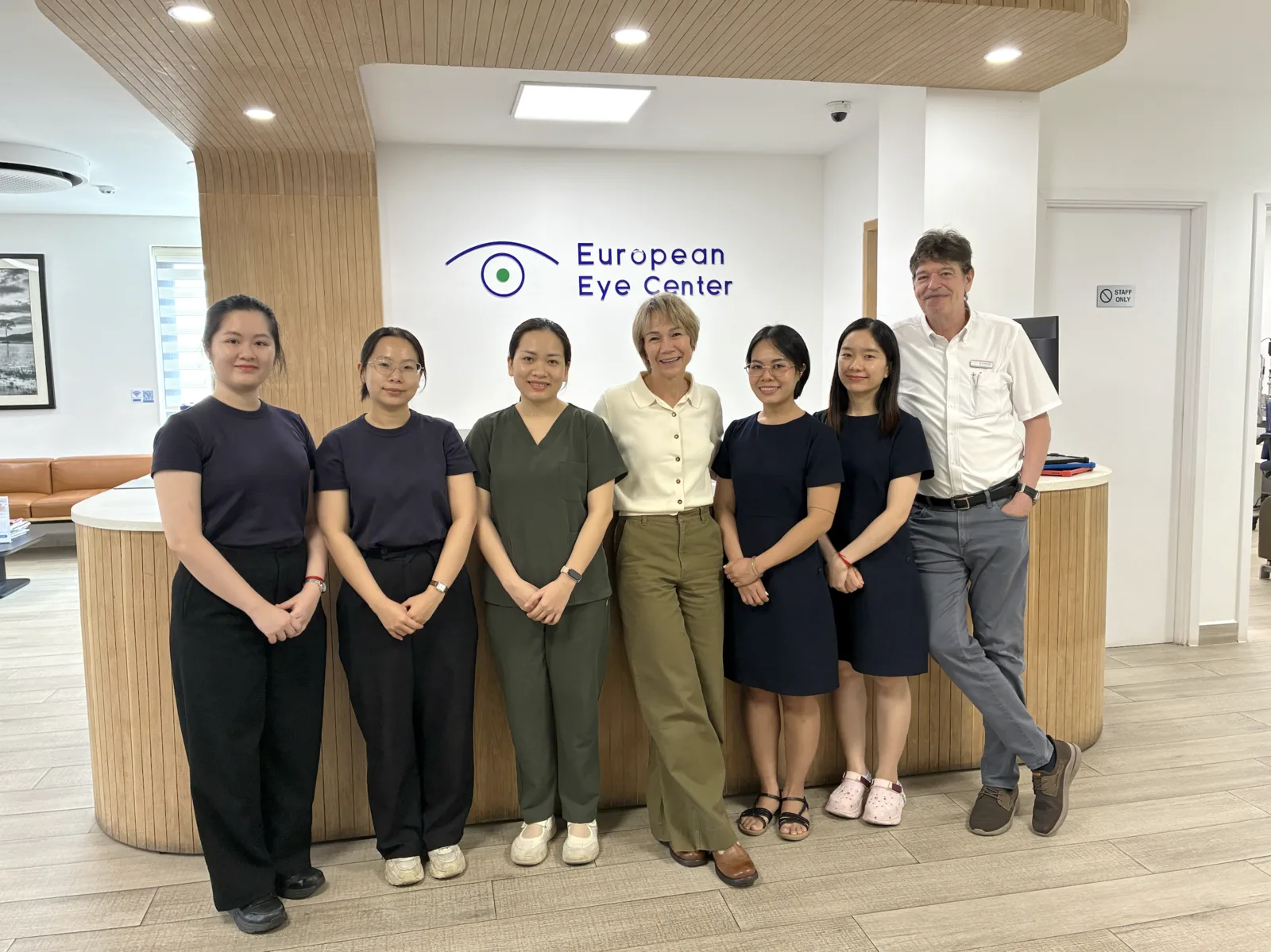
A pediatric visit needs more than a doctor. The optometrist, the imaging tech, and the family coordinator each play a part in making the room feel safe.
Children don't know what 'normal' looks like — that's why we look so carefully, and why early screenings are so important.
A child with a difference in vision will adapt around it long before they think to mention it. The job of the exam is to find what the child can't yet describe, while the window to correct it is still open.
Dr. JD Ferwerda, MD · Lead Ophthalmologist
Detection of irregular corneal curvature that distorts vision in children — corrected early to prevent lifelong blur and visual delay.
Read more →Atropine drops, defocus lenses, Ortho-K — chosen for the trajectory we measure, not a fixed protocol.
Read more →Overnight lenses that shape the cornea, giving daytime clarity without glasses and slowing axial elongation.
Read more →Assessment and management of eye misalignment in children — orthoptic care, patching, and surgical referral when needed.
Read more →Retinopathy of prematurity assessment for at-risk infants, using indirect ophthalmoscopy and the specialised lenses it requires
Read more →Early detection and patching therapy for lazy eye — outcomes are best when treated well before age seven.
Read more →A child's vision is crucial for their development and learning. Regular eye exams help identify and treat potential vision problems early, preventing future complications. Why are regular eye exams important?

Your child should have their first eye exam around 6 months of age. Follow-up exams are recommended at 3 years old and again before they start school. After that, annual check-ups help ensure healthy vision development.
Watch for frequent squinting or eye-rubbing, holding books or devices too close, complaints of headaches or blurry vision, poor school performance or difficulty focusing, and misaligned eyes (crossed or turned eyes). If you notice any of these signs, schedule an eye exam promptly.
Our general eye consultation for children includes a medical history review, visual acuity test, refraction test, eye alignment and movement test, slit-lamp examination, biometry (eye size measurement), and colour vision test when needed. You will leave with any relevant prescriptions or medications and a detailed consultation with our experienced European ophthalmologists. Diagnosing certain conditions requires retinoscopy and cyclopentolate eye drops to relax the eye's focusing, which take 45–60 minutes to take effect.
Expert care by Dr. JD Ferwerda, a Dutch ophthalmologist with 30+ years of experience; specialised services like ROP screening, myopia management, and more; a child-friendly environment with modern diagnostic tools; and personalised, compassionate care tailored to each child's needs.
An exam usually takes about 45–60 minutes, especially if eye drops (such as cyclopentolate) are needed to relax the eye's focusing mechanism.
Yes. We use child-friendly tools and techniques to make exams comfortable and engaging while still getting an accurate reading. Procedures like skiascopy demand extra time and skilled handling; cyclopentolate drops prevent your child's focusing so we can measure the eye's true refractive power.
The most common are refractive errors (myopia, hyperopia, astigmatism), amblyopia (lazy eye), strabismus (crossed eyes), and vision loss. Refractive errors affect how light enters the eye. Amblyopia — the brain favouring one eye over the other — is the leading cause of childhood vision loss. Strabismus is misalignment that can lead to amblyopia if untreated. If you suspect any of these, an early specialist exam is the best step.
Strabismus is treatable through a combination of glasses, eye exercises, and — in some cases — specialised treatments or surgery. Early intervention is key to improving eye alignment and preventing vision loss.
Myopia progression can be managed with treatments like Orthokeratology (Ortho-K), specialised myopia-control glasses, atropine drops, and lifestyle changes such as reducing screen time and encouraging outdoor activities.
Eye clinics provide comprehensive eye care that goes beyond checking for glasses. At European Eye Center, experienced ophthalmologists can diagnose and treat a wide range of conditions — including lazy eye (amblyopia), crossed eyes (strabismus), and Retinopathy of Prematurity (ROP) — with advanced diagnostic tools that assess your child's overall eye health and visual development. Optical stores typically focus on fitting glasses and may lack the specialised equipment or medical expertise to detect complex eye conditions.