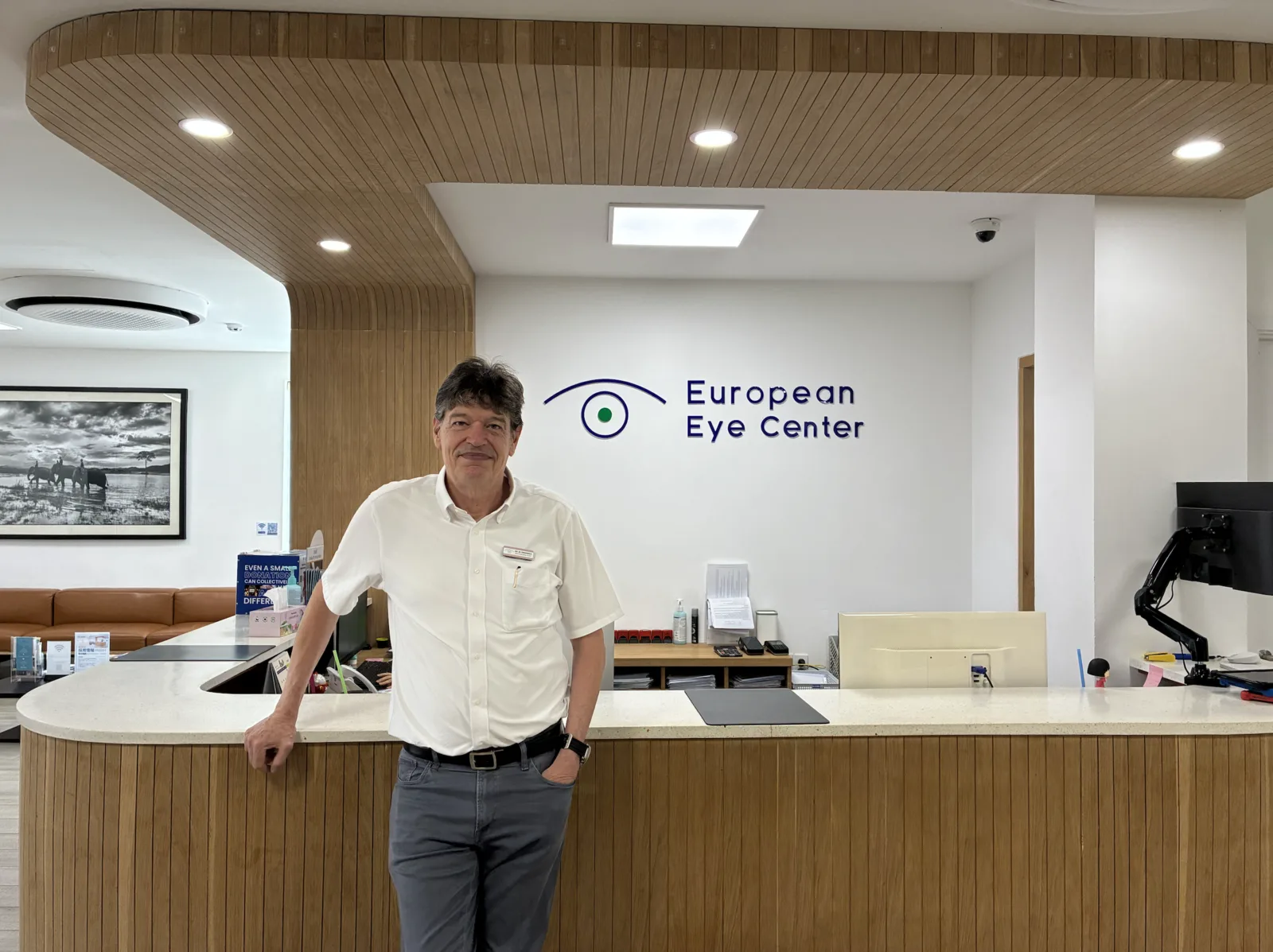
Lead Ophthalmologist · Cataract and Retina Surgeon
Dr. JD Ferwerda, MD
Dr. JD Ferwerda, MD: Dutch-trained ophthalmologist specialising in cataracts, lens exchange, retinal disease, glaucoma, and AMD.
Orthokeratology uses specially shaped rigid contact
lenses worn overnight to temporarily reshape the
cornea providing clear glasses-free vision throughout
the next day.
Some studies suggest that in some cases Ortho-K helps slow the progression of myopia in children and provide reversible daytime vision correction for suitable adults, subject to careful fitting and ongoing review.

Orthokeratology — usually shortened to Ortho-K — is a non-surgical method of correcting short-sightedness, in which a custom-designed rigid gas-permeable contact lens is worn during sleep. The lens uses a precisely engineered curve on its inside surface to apply the gentlest of pressure to the central cornea, gradually flattening it just enough to bring distant objects back into sharp focus. The change is temporary and reversible, and the lens is removed first thing in the morning.
The result is clear vision through the entire day with no glasses, no daytime contacts, and no surgery. Some studies suggest that in some cases Ortho-K may slow down the progression of myopia in children and teenagers — the reshaped cornea changes the way light lands on the peripheral retina, and that change may help slow axial growth, which is what raises prescriptions year after year. Done well, it puts both vision correction and myopia care into a single nightly habit.

Ortho-K lenses are designed around a reverse-geometry curve. Where a normal contact lens sits passively on the eye, an Ortho-K lens has a centre that vaults slightly above the cornea and a mid-peripheral zone that presses gently inward. While you sleep, the lens redistributes the corneal surface cells very slightly — flattening the central cornea by a calculated amount.
Ortho-K rewards patients who can build a steady nightly routine and want freedom from daytime correction — particularly children whose prescriptions are still moving year on year.

Children and teenagers with progressing myopia, where slowing axial elongation matters as much as correcting the current prescription

Adults who want clear daytime vision without glasses or daytime contacts

Swimmers, athletes, and people who work in dusty or contact-lens-unfriendly environments
Anyone who is not yet a candidate for refractive surgery — or who simply prefers a reversible, non-surgical option
Ortho-K isn't surgery, but it does ask the eye to adapt to a new nightly habit. Most patients find the routine becomes effortless within a month.
Some lens awareness is normal in the first nights. Vision in the morning is steadier than expected; daytime sharpness gradually improves over the following days.
Most patients reach functional daytime clarity by the end of the first week. The first review confirms the corneal shape change is on plan.
Insertion and removal take less than a minute each end of the day. Full daytime correction is established, and the schedule becomes effortless for most families.
Routine monitoring every four months, lens replacement once a year, and axial-length tracking for children to confirm myopia progression is being slowed.
Dr. JD Ferwerda, MD: Dutch-trained ophthalmologist specialising in cataracts, lens exchange, retinal disease, glaucoma, and AMD.
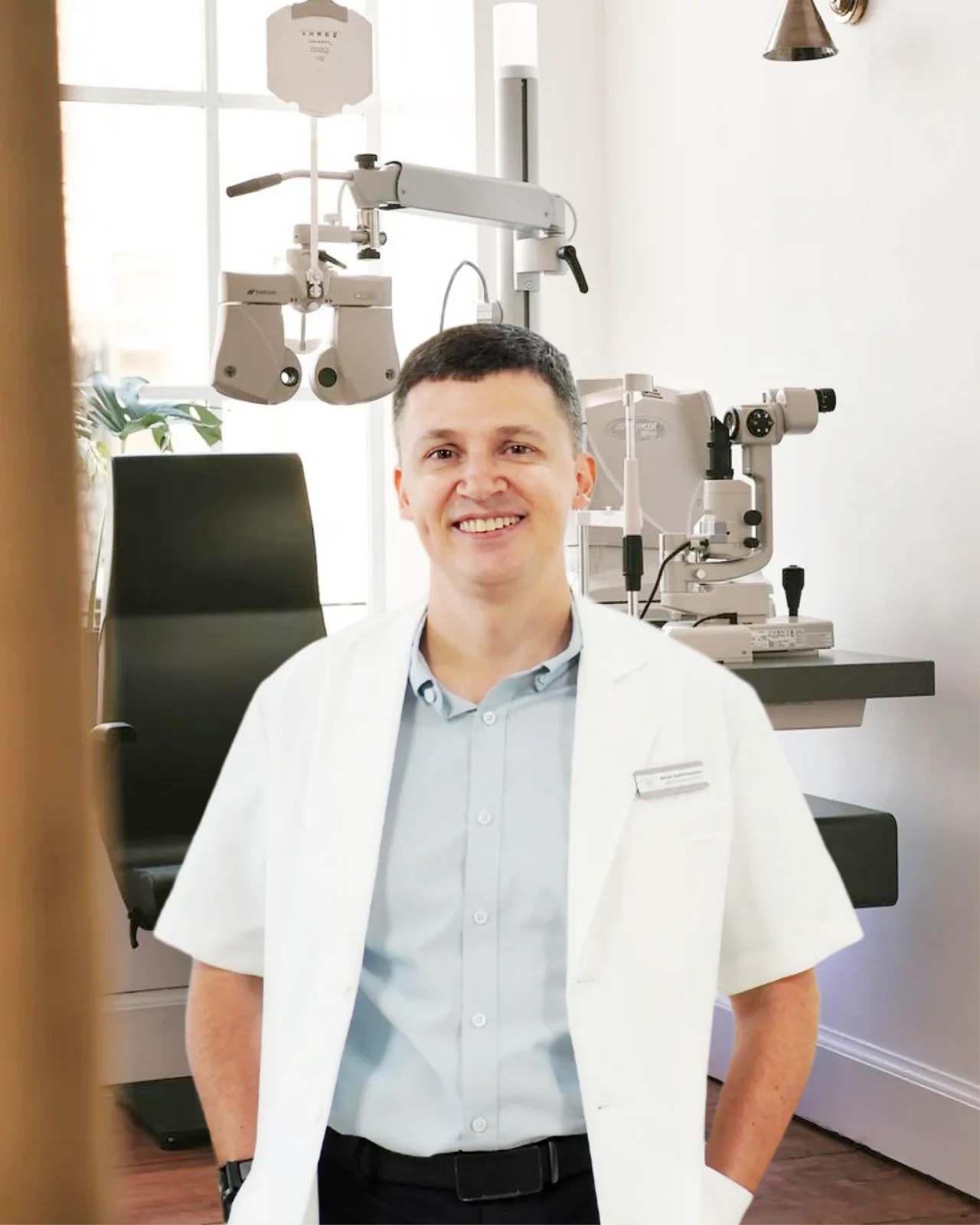
Russian-trained refractive and general ophthalmologist, leads lasik/ laser vision correction at EEC

