


Lead Ophthalmologist · Cataract and Retina Surgeon
Dr. JD Ferwerda, MD
Dr. JD Ferwerda, MD: Dutch-trained ophthalmologist specialising in cataracts, lens exchange, retinal disease, glaucoma, and AMD.
When light entering your eye doesn't focus precisely on the retina, distance, near, or both can blur. Short-sightedness (myopia), far-sightedness (hyperopia), astigmatism, and age-related reading change (presbyopia) — together these are called refractive error, and each behaves differently and responds to different solutions. We'll tell you which one is yours, and what's worth doing about it.
Each behaves differently and is corrected differently. Start with the one that sounds like you — or book a consultation and we'll work it out together.
Myopia
Distance blurs while near stays clear. Often starts in childhood and keeps changing — which is why monitoring and myopia control matter.
Read about myopia →Hyperopia
Near work tires the eyes first; in children it can show up as headaches or reading avoidance. Often missed without refraction.
Read about hyperopia →Irregular corneal curve
Vision is slightly smeared at every distance — shadowed letters, streaky headlights. Corneal mapping shows what a refraction can't.
Read about astigmatism →Presbyopia
From around the mid-forties, the lens stiffens and near focus gets harder. Reading glasses, multifocals, or a lens-based option.
Read about presbyopia →Amblyopia
One eye that never developed full vision, usually from childhood. Worth assessing at any age — and very treatable when caught early.
Read about amblyopia →Contact lenses, glasses & vision correction
Book a specialist refraction. We measure all of it together, screen the cornea and retina, and explain — glasses, contact-lens fitting, or surgical options.
Book a consultation →If blurred vision at any distance affects daily life, please book a consultation soon.
The eye works like a camera. The cornea and lens at the front bend incoming light so it lands precisely on the retina at the back, where it's turned into the image you see. When the geometry is slightly off — the eyeball a little too long or too short, the cornea a little too curved, the lens losing its near-focus flexibility — light arrives at the wrong place, and the image blurs. That mismatch is what we call refractive error.
The four common forms are myopia (light focuses in front of the retina, distance blurs), hyperopia (light focuses behind, near blurs first then distance), astigmatism (the cornea isn't perfectly spherical, so all distances are slightly distorted), and presbyopia (age-related stiffening of the lens, near work becomes harder from around the mid-forties). Most patients have one of these, often more than one. Each is correctable. Each deserves its own conversation.
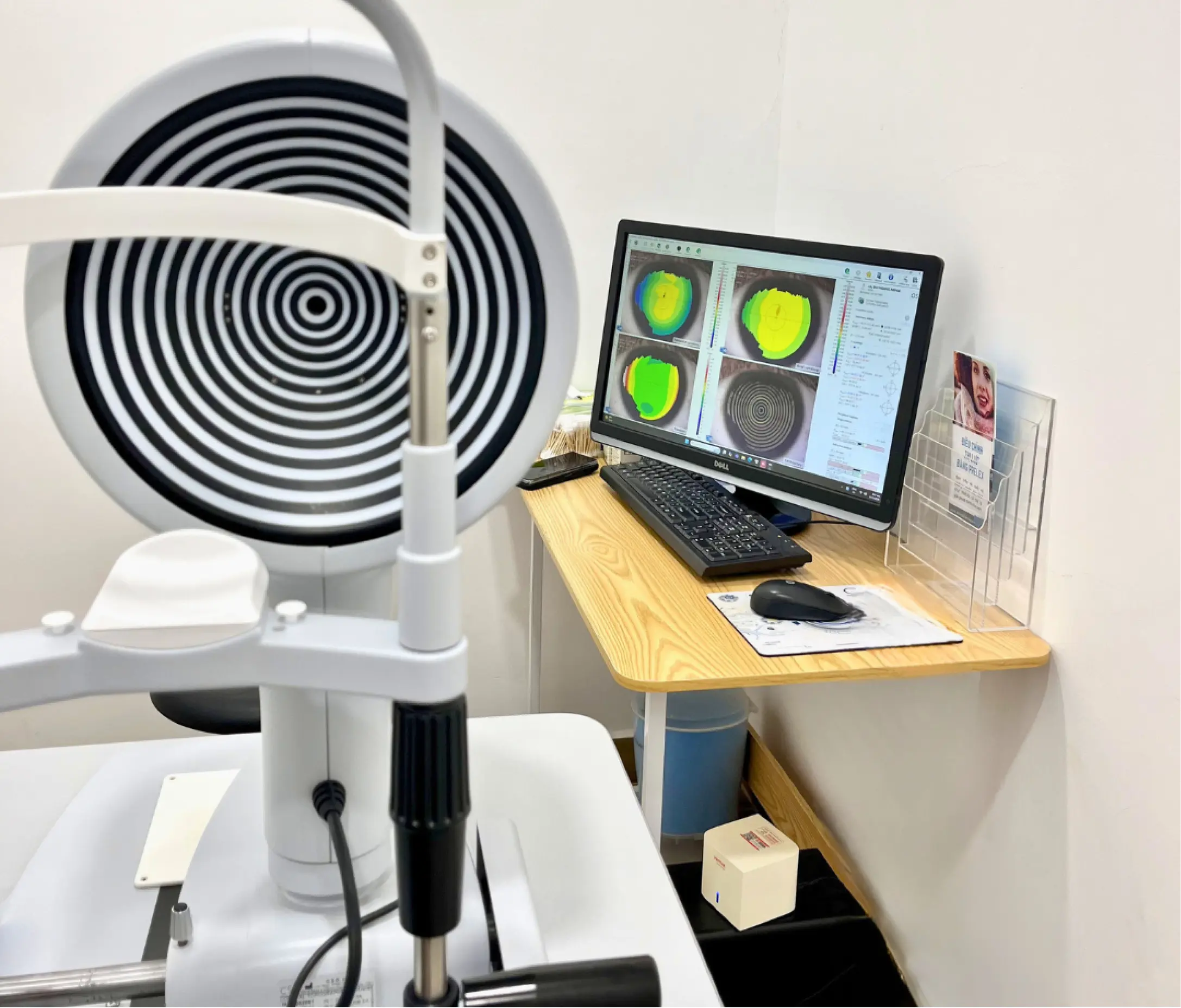
A refraction measurement on its own gives you a glasses prescription. It does not explain why the prescription is changing, whether the cornea is healthy enough for laser surgery, or whether something behind the lens is contributing to the blur. A specialist refractive evaluation looks at the whole optical system — corneal shape, thickness, lens clarity, retinal anatomy — and treats the refraction as the starting point, not the conclusion.
If any of these feel familiar, a refractive evaluation is worth the visit — even if the answer is just "your glasses are fine."
Your prescription has changed more than once in the past year
You're squinting, holding things further away, or relying on more light
Your child sits close to the screen or board, or holds books up close
You're considering LASIK, SMILE, ICL, ortho-K, or refractive lens exchange
Reading has become harder over the past one or two years
You suspect one eye is doing more of the work than the other
Dr. Artem Kozhechenkov leads refractive evaluation at EEC. The assessment is thorough by design: a refraction with trial lenses (and cycloplegic where useful), corneal topography to map the front surface, biometry to measure the eye's axial length, intraocular pressure, ocular surface and tear-film checks, and a retina review. The aim is a complete picture of the optical system before any conversation about correction. Findings are explained on screen with the imaging visible — not summarised in jargon afterwards. Both Dr Artem Kozhechenkov and Dr JD Ferwerda are experts in diagnosing refractive errors. Each has their own expertise in what comes after.
Whether you're here because your glasses keep changing or because you're considering surgery, the imaging answers the same question first: what is the eye actually doing? Topography rules out irregular shape. Biometry rules out subtle eye-length changes. The dilated retinal exam rules out anything that would change the conversation entirely. Only after we have those answers does it make sense to talk about correction.
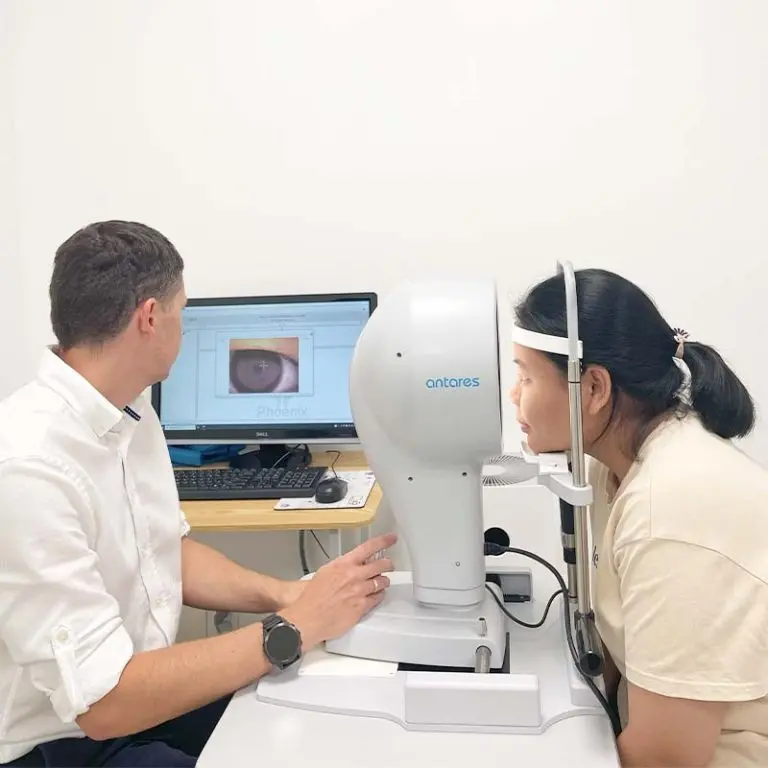
Four parts — your doctor will tell you what each one shows. We won't shortcut any of them.
What you've noticed, when it started, current glasses or contacts, work and hobby demands, family history.
Trial-lens refraction, corneal topography, biometry, ocular-surface check, retinal review where indicated.
The doctor walks through what the imaging shows and which corrections fit your eyes — glasses, contacts, ortho-K, surgery, RLE.
A clear next step in writing — updated prescription, monitoring interval, surgical workup, or "no change needed."
“Dr Ferwerda is a world class eye surgeon. And the staff at EEC is equally professional and extremely friendly. Highly recommended.”
Dr. JD Ferwerda, MD: Dutch-trained ophthalmologist specialising in cataracts, lens exchange, retinal disease, glaucoma, and AMD.
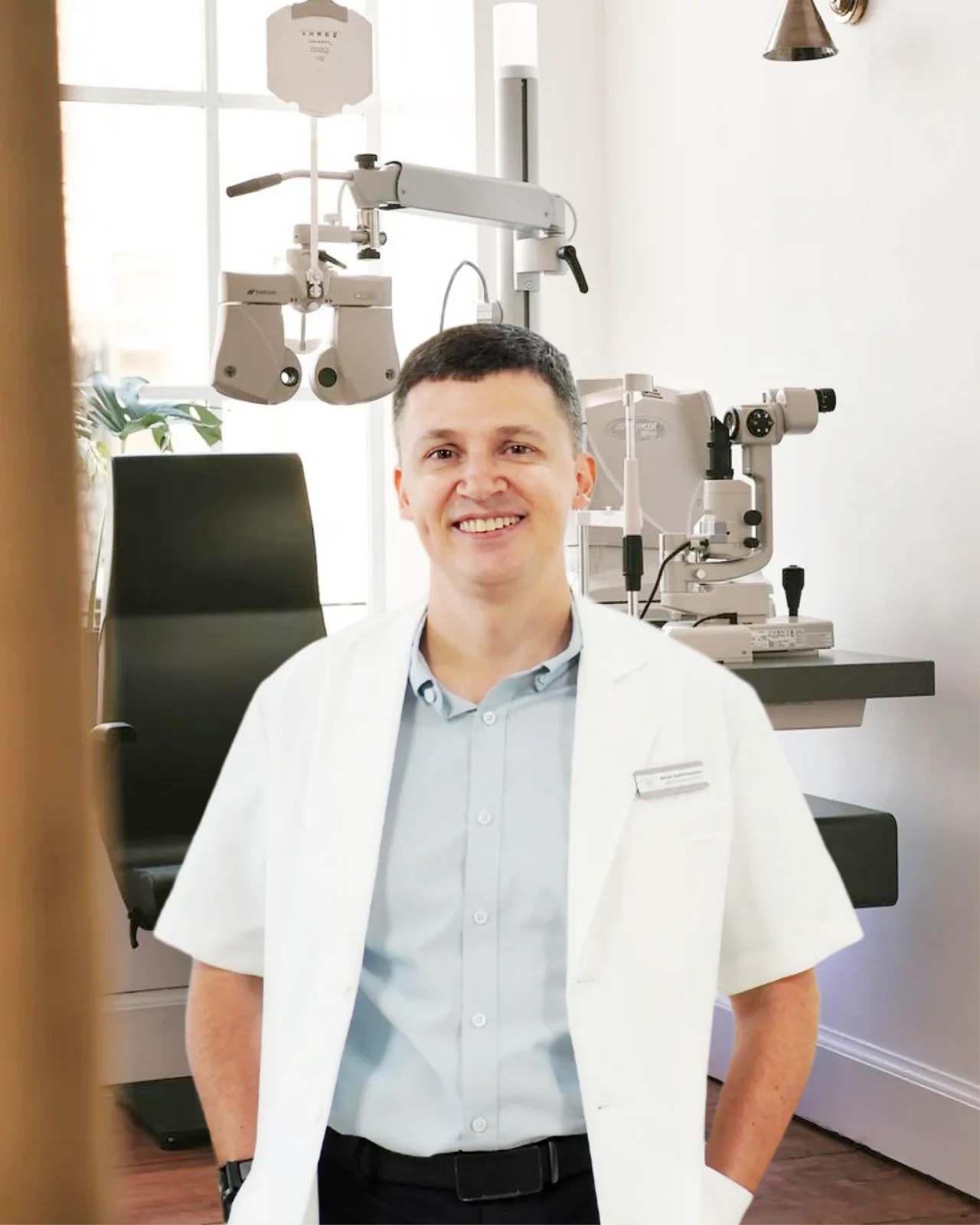
Russian-trained refractive and general ophthalmologist, leads lasik/ laser vision correction at EEC