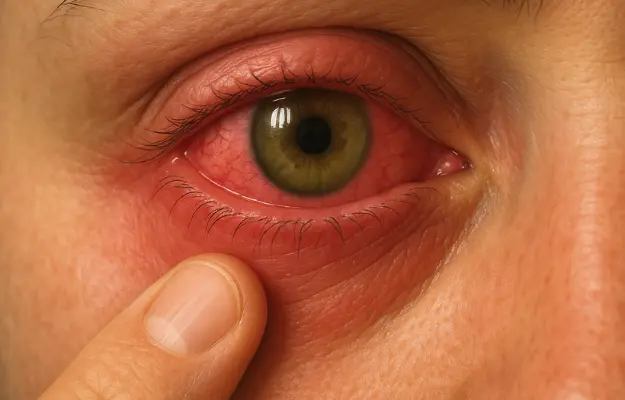
In modern life, our eyes play an incredibly vital role, acting as the "windows to our soul" that connect us to the world. However, refractive errors like myopia (nearsightedness), hyperopia (farsightedness), astigmatism, and presbyopia are becoming increasingly common, significantly impacting the quality of life, work, and education of millions of people. Understanding the nature of these conditions, their underlying causes, and the most effective refractive error treatments is the first and most crucial step toward protecting your vision and maintaining healthy eyes in the long term.
This article is a comprehensive and in-depth guide designed to help you explore every aspect of refractive errors. We will delve into the detailed mechanism of how the eye works, analyze each common refractive error from its causes and symptoms to the most advanced diagnostic and treatment methods. The article will also include useful advice from eye care professionals on daily eye care, helping you make the most suitable choices for yourself and your family.
What are Refractive Errors? The Eye's Mechanism and Contributing Factors
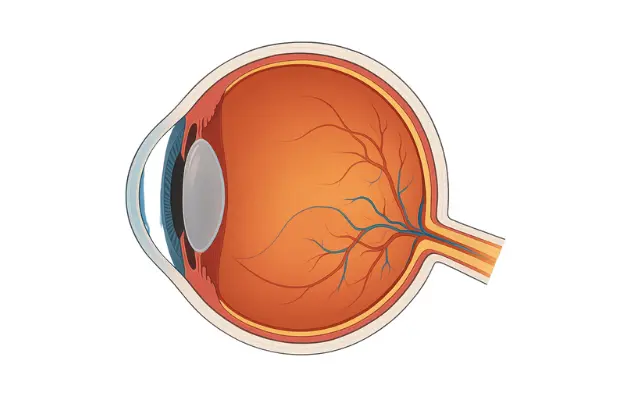
To understand refractive errors, we first need to grasp the mechanism of a healthy eye. The eye functions like a sophisticated biological camera, where light enters and is focused into a sharp image on the retina.
- Cornea: This is the transparent, dome-shaped outer layer at the front of the eye. It is responsible for refracting (bending) most of the incoming light. It acts as the eye's most powerful lens.
- Lens: Located behind the iris, it acts as an automatic focusing lens, changing its curvature to fine-tune the focus, accurately concentrating light onto the retina, regardless of whether the object is near or far. This ability is called accommodation.
- Retina: A light-sensitive layer of nerve tissue at the back of the eye. Here, light is converted into electrical signals and transmitted to the brain via the optic nerve to form an image.
A normal eye is called emmetropic. In an emmetropic eye, light is accurately refracted by the cornea and lens, converging at a single point on the retina, creating a clear image. A refractive error occurs when this process is flawed, causing the image to not be focused correctly on the retina, resulting in blurred vision.
Factors that cause refractive errors:
- Genetic Factors: Refractive errors, especially myopia, often have a genetic component. If one or both parents are nearsighted, their child has a higher chance of developing myopia.
- Environmental Factors: Studying and working in poor lighting, prolonged use of electronic devices, and incorrect posture while reading are major causes of myopia and other refractive errors.
- Aging: This is the primary cause of presbyopia, as the lens loses its elasticity over time.

Common Refractive Errors and Detailed Symptoms
There are four common types of refractive errors, each with distinct characteristics and symptoms.
Myopia (Nearsightedness)
Myopia is the most prevalent refractive error globally, particularly in Asian countries. Individuals with myopia can see near objects clearly but have blurred vision for distant objects. This condition is alarmingly increasing among school-aged children.
Mechanism
Myopia occurs when the eyeball is too long relative to the curvature of the cornea and lens, or when the cornea is too steeply curved. Both cases cause light to converge in front of the retina instead of directly on it.
Symptoms
-
- Significantly blurred vision for distant objects such as a blackboard, TV screen, or road signs.
- Frequently squinting or tilting the head to try and see clearly.
- Eye strain and headaches after focusing on distant objects.
- Children often sit close to the TV or hold books and tablets very close to their face.
Classification
-
- Simple Myopia: Usually appears in childhood, progresses rapidly during growth spurts, and stabilizes in adulthood.
- Degenerative Myopia: Also known as high myopia, it progresses continuously and rapidly, which can lead to serious retinal complications.
>> Ortho-K: Taking Control of Your Child's Myopia
Hyperopia (Farsightedness)
In contrast to myopia, hyperopia is a condition where the eye can see distant objects clearly but has blurred vision for near objects. In some severe cases, a hyperopic person may experience blurred vision at all distances.
Mechanism
Hyperopia occurs when the eyeball is too short or the cornea is too flat, causing light to focus behind the retina.
Symptoms
-
- Blurred vision when reading, using a phone, or working at close range.
- Eye strain and headaches, especially at the end of the day, due to the eye's constant effort to accommodate and focus.
- A feeling of tension and discomfort in the eyes, which may be accompanied by watery eyes.
- Young children with hyperopia may be prone to strabismus (crossed eyes) due to constant muscle strain.
Astigmatism
Astigmatism is the third most common refractive error, often occurring alongside myopia or hyperopia. Individuals with astigmatism experience blurred or distorted vision at all distances.
Mechanism
A normal cornea has a perfectly spherical shape, like a soccer ball. A person with astigmatism has an irregularly curved cornea, often shaped more like a rugby ball, causing light to focus at multiple points instead of a single point on the retina.
Symptoms
-
- Blurred, distorted, or stretched vision at both near and far distances.
- Straight lines may appear curved or broken.
- Eye strain and headaches, especially when reading or working on a computer.
- Frequent squinting to try and see clearly.
- Can experience glare or halos around lights at night.
Presbyopia
Presbyopia is a natural aging process of the eye that typically begins after age 40. Unlike other refractive errors, presbyopia is not caused by the shape of the cornea or eyeball but by the loss of elasticity and flexibility of the eye's natural lens.
Mechanism
When we are young, the lens is flexible and can change shape (accommodate) to help the eye focus on objects at different distances. As we age, the lens becomes harder and less flexible, losing its ability to accommodate, making it difficult to focus on near objects.
Symptoms
-
- Difficulty reading books, newspapers, or using a phone at close range.
- Needing to hold objects farther away to see them clearly.
- Eye strain and headaches when working at near distances.
- Needing brighter light to read.
Classification
-
- Simple Presbyopia: Only affects near vision.
- Combined Presbyopia: Presbyopia occurs in a person who already has myopia, hyperopia, or astigmatism.
>> Read more: A Guide to Identifying and Managing Common Eye Diseases
Treatment and Correction Methods for Refractive Errors
There are various effective methods for refractive error treatment, ranging from simple to complex, tailored to each individual's needs and conditions. The choice of method should be made after a thorough consultation with an eye care professional.
Eyewear (Glasses and Contact Lenses)
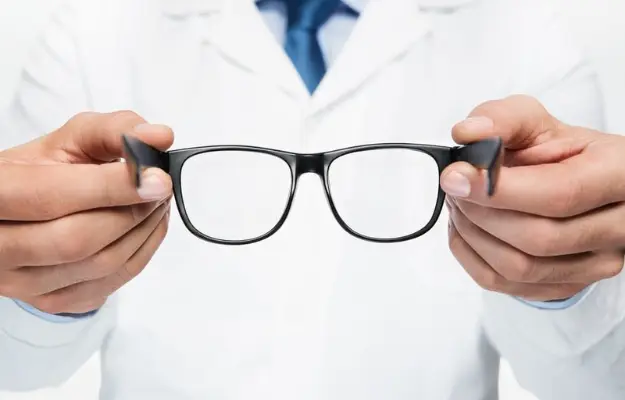
This is the most common, simple, economical, and safest method of correction. Eyewear works by adjusting the path of light before it enters the eye, helping the image to focus correctly on the retina.
Glasses
-
- Pros: Common, safe, easy to use, and affordable. Glasses come with various lens types to correct myopia, hyperopia, astigmatism, and even presbyopia (bifocals, progressives).
- Cons: Limited peripheral vision, inconvenient for sports, prone to fogging up in temperature changes or getting wet.
Contact Lenses
-
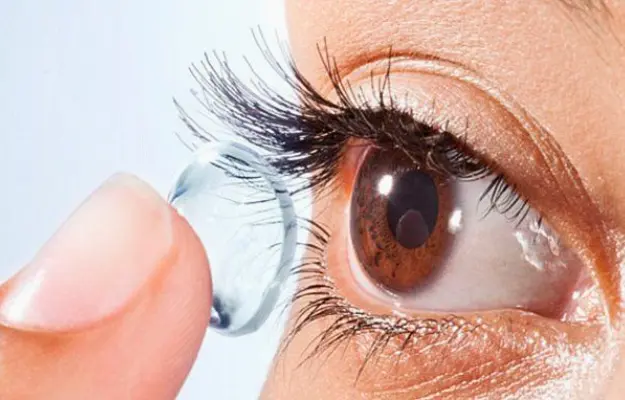
- Pros: Thin lenses placed directly on the cornea, providing wider, more natural vision and suitable for an active lifestyle. There are various types of contact lenses, from daily disposables to monthly wear.
- Cons: Requires a strict hygiene routine to avoid infection and dry eyes. The long-term cost can be higher than refractive surgery.
Ortho-K Lenses (Nighttime Lenses)
-
- Pros: This method uses special rigid contact lenses worn overnight to temporarily reshape the cornea. When the lenses are removed in the morning, the wearer can see clearly without glasses. It is very effective in controlling the progression of myopia in children.
- Cons: Must be worn every night, has a high initial cost, and requires a strict hygiene routine.
>> Eyeglasses, Ortho-K, or Refractive Surgery: Which Is the Optimal Choice for Myopia?
Laser Refractive Surgery
Laser surgery is a definitive method for treating refractive errors, helping to eliminate dependence on glasses or contact lenses. The most popular methods include:
LASIK (Laser-Assisted in Situ Keratomileusis)
-
- Mechanism: The surgeon uses a femtosecond laser (or a mechanical blade) to create a thin corneal flap. This flap is then lifted, and an excimer laser is used to reshape the underlying corneal tissue to correct the refractive error. Finally, the flap is repositioned without stitches.
- Pros: Fast recovery (usually within 24 hours), minimal pain, high effectiveness, and near-absolute precision.
- Cons: Suitable for individuals with sufficient corneal thickness. Can cause side effects like dry eyes and night vision halos.
PRK (Photorefractive Keratectomy)
-
- Mechanism: The earliest laser refractive surgery. The surgeon removes the outer layer of the cornea (the epithelium), and then an excimer laser reshapes the cornea. After surgery, the epithelial layer regenerates naturally.
- Pros: Suitable for people with thin corneas or an active lifestyle (no flap means no risk of flap-related trauma). Lower risk of dry eyes than LASIK.
- Cons: Longer recovery time than LASIK (several days to a few weeks), can cause mild discomfort and pain in the first few days.
ReLEx SMILE (Small Incision Lenticule Extraction)
-
- Mechanism: This is the most advanced and minimally invasive laser technology. The surgeon uses a femtosecond laser to create a small lens-shaped piece of corneal tissue (lenticule) inside the cornea. This lenticule is then removed through a tiny incision (2-4mm).
- Pros: Minimally invasive, no corneal flap, fast recovery, less risk of dry eyes, and minimizes complication risks.
- Cons: Higher cost than LASIK and PRK, only applicable for myopia and myopic astigmatism.
Phakic ICL Surgery
Phakic ICL Surgery is a specialized method for individuals with very high refractive errors (severe myopia, severe hyperopia) or thin corneas who are not suitable for laser surgery.
- Mechanism: The surgeon implants an ultra-thin, flexible intraocular lens (made from a material called Collamer) behind the iris and in front of the natural lens. This implantable lens works to correct the refractive error without changing the shape of the cornea.
- Pros: Can treat extremely high refractive errors, does not alter the corneal shape, is removable if needed, and preserves the natural lens and its ability to accommodate.
- Cons: It is an intraocular surgery, more invasive than laser surgery, and has a very high cost.
Eye Care and Expert Advice
Regardless of the refractive error treatment you choose, proper eye care is a key factor in maintaining long-term vision health.
- Regular Eye Exams: Even after surgery, you should have your eyes checked every 6-12 months to monitor their health.
- Healthy Diet: Consume foods rich in vitamins A, C, E, zinc, and omega-3s, which are beneficial for the eyes, such as salmon, carrots, dark leafy greens, and nuts.
- Protect Your Eyes from the Sun: Wear quality sunglasses when outdoors to protect your eyes from UV rays and prevent sun-related eye diseases.
- Limit Screen Time: The blue light from screens can cause eye strain and dry eyes. Follow the 20-20-20 rule: every 20 minutes, look at something 20 feet (6 meters) away for 20 seconds.
- Get Enough Sleep: Your eyes also need rest. Getting 7-8 hours of sleep each night helps your eyes recover from a day of work.
- Eye Exercises: Regularly perform simple exercises like rolling your eyes or shifting focus between near and far objects to relax your eye muscles and improve accommodation.
Conclusion
Refractive errors are not a barrier to a fulfilling life. With the remarkable advancements in modern medicine, there are many effective refractive error treatment methods available, from simple glasses to advanced surgical technologies. Understanding these conditions, seeking professional advice from an eye care specialist, and practicing proper eye care will empower you to have healthy, sharp vision and confidently enjoy life to the fullest.