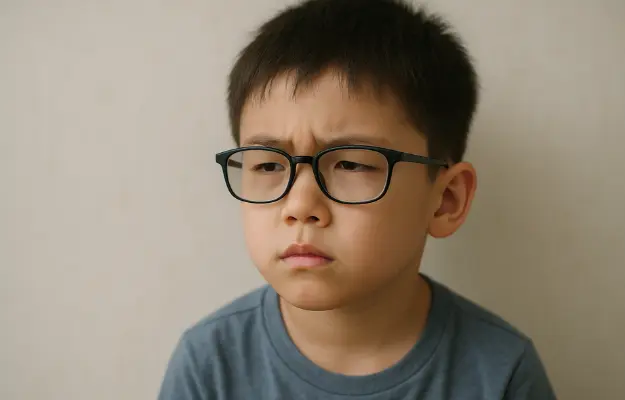
Are you concerned about your child's vision? When one of your child's eyes sees significantly less clearly than the other and cannot be corrected with regular eyeglasses, it could be a sign of Amblyopia, also known as Lazy Eye. This is an abnormal visual development condition that usually begins in early childhood, and if not detected and treated promptly, it can lead to permanent vision loss in the affected eye.
This article will help parents and caregivers understand amblyopia in children, from early warning signs to the most effective treatment solutions. Accurate information is key to protecting your child's bright and healthy vision for the future.
What is Amblyopia (Lazy Eye)? Why Are Children Susceptible?
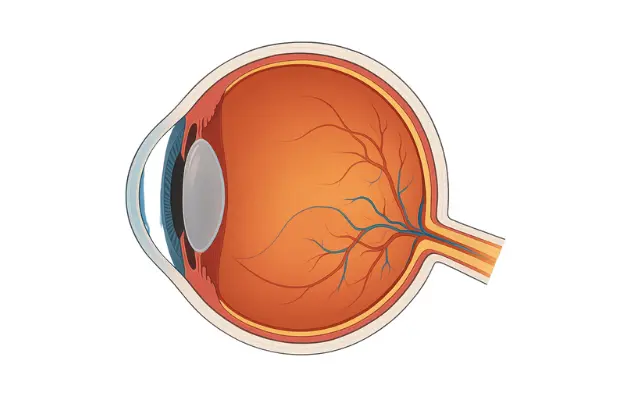
Amblyopia is a condition where the vision in one eye (or, more rarely, both eyes) does not develop properly, despite no apparent structural damage to the eye itself. This occurs when the brain, during a critical period of visual development (typically from birth to about 7-8 years old), "prefers" to receive clear visual signals from the stronger eye and gradually ignores signals from the weaker eye. Over time, the neural pathways connecting the weaker eye to the brain do not develop fully, causing that eye to become "lazy" and see poorly permanently if not "awakened."
Why are children susceptible to amblyopia? Because early childhood is a "golden period" for the development of the visual system. The brain needs to be stimulated by clear and symmetrical images from both eyes to develop complete vision. If any factor prevents an eye from sending clear images to the brain (such as a severe refractive error, or a squint), or if the brain receives significantly different images from the two eyes, amblyopia will develop.
>> How Vision Problems Impact Children’s Learning and Academic Performance
Warning Signs of Amblyopia in Children
Since young children often do not realize or cannot articulate that one of their eyes sees poorly, early detection of amblyopia heavily relies on the keen observation of parents, teachers, and caregivers.
Common signs to watch out for:
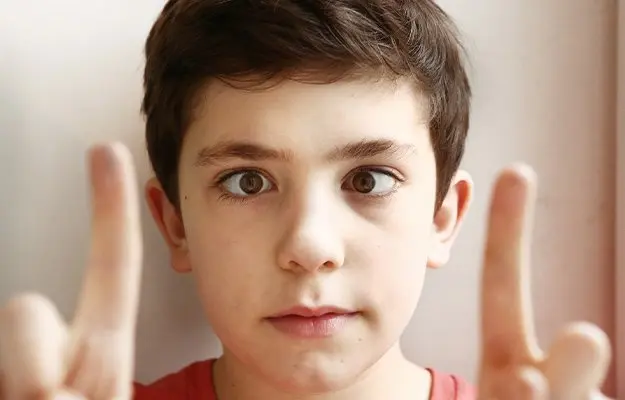
- Strabismus (crossed or misaligned eyes): This is the most common cause of amblyopia. One eye tends to turn inward, outward, upward, or downward.
- Frequent squinting or closing/covering one eye when looking: Especially when looking at distant objects or in bright light.
- Tilting or turning the head to see better.
- Difficulty with depth perception (poor 3D vision): The child may frequently trip, knock over objects, or have trouble with games requiring hand-eye coordination.
- Appears inattentive or oblivious to images on one side: For example, not reacting to an object presented from one side.
More subtle signs (which may be harder to notice):
- Poor gross motor skills (running, jumping).
- Difficulty with reading or copying from a board.
- Lack of interest in activities requiring detailed vision (like drawing, assembling toys).
- Frequent eye rubbing.
Important Note: Sometimes, amblyopia shows no obvious signs. That's why regular eye exams for children are extremely important, even if you don't notice anything unusual.
Causes of Amblyopia
Amblyopia occurs due to any factor that causes the brain to ignore signals from one eye. Common causes include:
- Untreated or uneven refractive errors (Anisometropia):
- Severe farsightedness, nearsightedness, or astigmatism: If one eye has a high refractive error that is not corrected with glasses, the image it sends to the brain will be blurry, causing the brain to ignore that eye.
- Significant difference in refractive error: For example, one eye is very nearsighted while the other is only mildly nearsighted or normal. The brain will prioritize the eye with clearer vision.
- Strabismus (Crossed Eyes): When the two eyes are not properly aligned and each eye looks in a different direction. To avoid double vision, the brain will ignore the image from the misaligned eye.
- Visual Deprivation (Obstruction of the Visual Pathway): Any condition that prevents light from entering the eye and forming a clear image on the retina, including:
- Congenital cataracts: Clouding of the lens present from birth.
- Ptosis (drooping eyelid): The eyelid covers the field of vision.
- Corneal scarring, eye tumors, intraocular hemorrhage.
>> Eye Problems in Children and Genetic Eye Diseases
Diagnosing Amblyopia: When to Seek a Specialist Eye Exam for Your Child?
The golden period for diagnosing and treating amblyopia is between 0 and 7-8 years of age, when the child's visual system is still in a crucial developmental stage and has the highest potential for recovery. After this age, the likelihood of improving vision in the amblyopic eye significantly decreases.
When should you take your child for a specialized eye exam?
- Newborn screening and regular health check-ups: Pediatricians will perform basic eye checks.
- First eye exam with an ophthalmologist: Should be done when the child is between 3 and 5 years old, or earlier if there are any suspicious signs.
- Regular follow-up exams: Even if the child's eyes appear normal, follow-up exams every 1-2 years are recommended.
Amblyopia diagnostic procedure at a specialized clinic:
- Visual acuity test: Assessing the seeing ability of each eye individually (usually using age-appropriate charts or pictures).
- Refraction test: Using eye drops to dilate the pupils, which helps accurately measure refractive error without interference from the child's accommodation ability.
- Eye alignment test (strabismus evaluation): Includes cover/uncover tests to see if the eyes are misaligned.
- Fundus exam and other structural checks: To rule out any underlying physical causes of vision loss (such as cataracts, retinal damage).
Effective Solutions for Treating Amblyopia
The goal of amblyopia treatment is to force the brain to use the weaker eye, thereby stimulating neural pathways and improving vision. Treatment often involves two main steps:
Step 1: Addressing the underlying cause (if any)
- Prescribing corrective eyeglasses: If amblyopia is due to farsightedness, nearsightedness, or astigmatism, wearing correctly prescribed glasses is the first and most crucial step. Glasses will help the weaker eye receive clear images, giving the brain a chance to start paying attention to it.
- Surgery: If amblyopia is caused by factors obstructing the visual pathway, such as congenital cataracts or ptosis, surgery needs to be performed early to remove the obstruction. If severe strabismus is the cause, strabismus surgery may be necessary.
Step 2: Training the brain to use the amblyopic eye
This is the main phase to "wake up" the lazy eye.
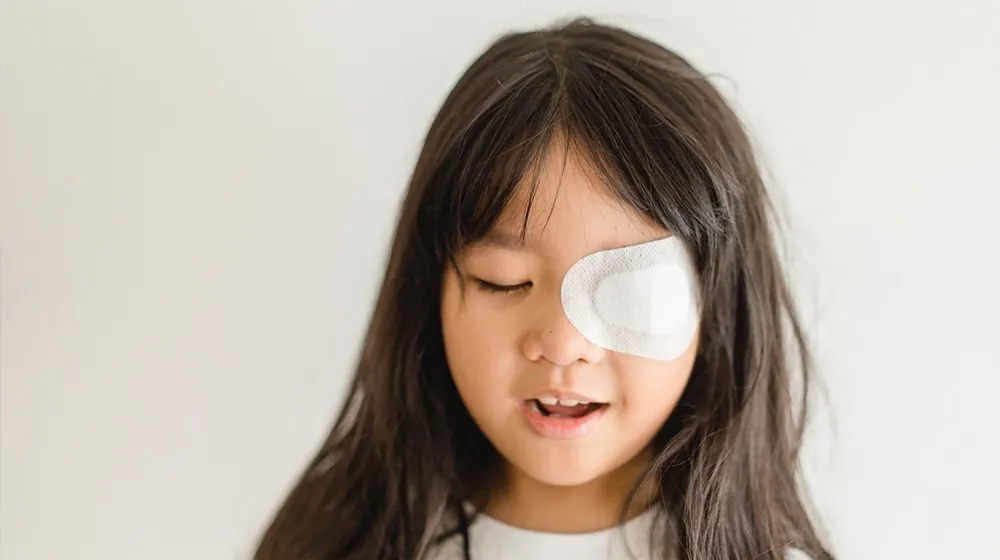
- Patching (Conventional Method):
- Mechanism: The stronger eye is patched for several hours a day (or all day, as per doctor's instructions) to force the amblyopic eye to work and send signals to the brain.
- Challenges: Children may be uncomfortable or resist. Parents need to be persistent, encouraging, and supervise.
- Note: The duration of patching must be closely monitored by a doctor to avoid inducing amblyopia in the stronger eye.
- Atropine Eye Drops:
- Mechanism: Atropine drops are applied to the stronger eye, temporarily blurring its vision (by dilating the pupil and paralyzing accommodation), forcing the brain to use the amblyopic eye.
- Advantages: May be more acceptable for children than patching.
- Limitations: Some side effects like light sensitivity, poor near vision in the treated eye.
- Occlusion spectacle lens: A special lens is placed in the glasses for the stronger eye to blur its vision, similar to patching but less noticeable.
- Vision Therapy:
- Involves specialized eye exercises designed to improve eye-brain coordination. Exercises can be performed with specific devices, computer games, or targeted activities.
The golden period for treatment: The earlier, the better. Treatment before 7-8 years of age offers the highest and most complete chance of visual recovery. After this age, the potential for improvement gradually decreases, but some progress can still be achieved with persistent treatment and appropriate therapy.
The Role of Parents and Perseverance in the Treatment Journey
The success of amblyopia treatment largely depends on the perseverance and cooperation of parents and the child's adherence to the treatment.
- Adhere to doctor's instructions: Treatment requires time and patience. Closely follow the patching schedule, eye drop routine, or assigned exercises.
- Create a positive environment: Turn treatment into a game, encourage, and praise the child.
- Regular follow-up appointments: For the doctor to monitor progress and adjust the treatment plan as needed.
Frequently Asked Questions About Amblyopia in Children (FAQ)
No. Amblyopia does not resolve on its own and will become permanent if not treated promptly.
The main treatment methods like wearing glasses, patching, or using Atropine drops are not painful. Surgery (if needed to correct the underlying cause) will be performed under anesthesia to ensure the child feels no pain.
The potential for visual recovery significantly decreases after 7-8 years of age. However, some cases may still see partial vision improvement at an older age with persistent treatment and appropriate therapy. Consult a specialist doctor for a specific assessment.
The duration of amblyopia treatment varies greatly depending on the severity of the condition, the child's age when treatment begins, and adherence. The process can last from several months to several years.
Amblyopia itself is not directly hereditary, but risk factors such as strabismus or severe refractive errors can have a genetic component. Therefore, if there's a family history of eye problems, early eye exams for children are even more important.
Conclusion
Amblyopia (lazy eye) in children is a serious condition but can be effectively treated if detected early and intervened promptly. Healthy eyes are a precious asset, and good vision is fundamental for a child's holistic development.
Don't miss the "golden period" to save your child's eyes. Be proactive in observing amblyopia warning signs and take your child for regular eye exams at specialized centers. Contact European Eye Center for accurate diagnosis and the most effective amblyopia treatment plan from leading experts, helping your child have a future with bright, healthy eyes!