Are you struggling to read news on your phone, see small print in books, or thread a needle? Do you often find yourself holding objects at arm's length just to see them clearly? If you're over the age of 40, you might be experiencing presbyopia – a natural part of the eye's aging process.
What is presbyopia? It's not a disease, but a very common refractive error that occurs as the eye's natural lens gradually loses its flexibility. Presbyopia can be inconvenient and significantly impact daily activities. This article will give you a comprehensive overview of presbyopia, from its underlying causes, easy-to-recognize symptoms, and accurate diagnostic methods, to modern treatment solutions, helping you regain sharp vision and enjoy a fulfilling life.
What Exactly is Presbyopia? Understanding "Aging Eyes"
Presbyopia is an age-related refractive error of the eye that causes it to gradually lose the ability to focus on close-up objects. Unlike other common refractive errors such as nearsightedness (myopia), farsightedness (hyperopia), or astigmatism – which can appear early in life – presbyopia is a natural physiological process, an unavoidable part of the body's aging.
To better understand presbyopia, imagine your eye as a sophisticated camera. The natural lens within your eye acts like an automatic focusing lens. It can change its thickness and curvature to adjust its focal length, helping light from objects at various distances focus precisely onto the retina, allowing us to see clearly. This process of changing focus is called accommodation.
When we are young, our natural lens is incredibly soft and flexible. Thanks to the Zinn's zonules and the ciliary body system, it can easily bulge or flatten, enabling the eye to quickly shift focus from distant to near vision and vice versa.
However, as we age, particularly from around 40-45 years old onwards, the lens begins to undergo irreversible structural changes:
- Hardening (Sclerosis): The proteins within the lens gradually change, causing it to become stiffer and less elastic.
- Increased Size: The lens continues to grow in size with age, which also reduces its ability to change the shape necessary for accommodation.
Due to this hardening and loss of shape-changing ability, the lens can no longer sufficiently bulge to increase its focusing power for near vision. As a result, light from close-up objects is not focused accurately on the retina but instead converges behind it, leading to blurred vision. This is the core reason behind presbyopia.
The process of presbyopia usually begins gradually and progresses increasingly from the age of 40, continuing until around 60 years old, after which it stabilizes. Most people aged 65 and older will experience some degree of presbyopia.

Early Signs and Symptoms of Presbyopia
The symptoms of presbyopia typically appear gradually and can become more noticeable when you read in dim lighting or later in the day when your eyes are tired. Here are some common signs you might observe:
- Difficulty reading small print or seeing close-up objects clearly: This is the most typical symptom. You'll find yourself unconsciously holding books, phones, menus, or other small objects farther away to be able to read or see them clearly.
- Headaches: Caused by excessive eye strain from trying to accommodate and sharpen images for near vision.
- Eye fatigue, eye strain: Especially after prolonged reading, computer work, or engaging in tasks requiring near vision.
- Squinting: You tend to squint to try and improve the sharpness of the image.
- Needing brighter light for reading: Difficulty reading or working at close distances in dim light; you'll feel the need to turn on brighter lights than usual.
- Difficulty transitioning from distance to near vision: Your eyes take longer to adjust focus when switching between looking at distant and near objects.
>> Read more: How to Read Your Eyeglass Prescription: A Simple Guide from A to Z
Presbyopia vs. Farsightedness: Don't Get Them Confused!
Although both presbyopia and farsightedness cause difficulty with near vision, they are two entirely different conditions in terms of their causes and mechanisms:
- Farsightedness (Hyperopia): This is a congenital or early-onset refractive error where the eyeball is too short or the cornea is too flat, causing light to focus behind the retina. Farsightedness can appear at any age, including childhood. People with severe farsightedness might experience blurred vision both far and near.
- Presbyopia: This is a natural aging process of the eye's natural lens, occurring due to the hardening of the lens with age, affecting the eye's accommodative ability for near vision. Presbyopia is not a disease, but an inevitable part of growing older. It typically only affects near vision, while distance vision may remain normal (unless other refractive errors are also present).
The Underlying Causes of Presbyopia
As discussed, the primary cause of presbyopia is the natural aging of the eye's crystalline lens. More specifically:
- Loss of Lens Elasticity: This is the main factor. The crystalline lens, a clear and flexible structure located behind the iris and pupil, has the crucial function of changing its curvature to focus light onto the retina, allowing us to see clearly at different distances. As we age, the proteins that make up the lens gradually undergo changes, causing it to become stiffer and less elastic. Its ability to "bulge" (become more convex), which is essential for near vision accommodation, diminishes.
- Decreased Function of the Ciliary Body: The ciliary body is a part of the eye that surrounds the lens and plays a vital role in contracting and relaxing to change the lens's shape. Over time, these muscles may also lose some of their strength and optimal contractile ability, reducing the overall efficiency of the accommodation process.
Additionally, several other factors can influence the degree and timing of presbyopia's onset, including:
- Age: This is the most significant risk factor. Presbyopia will almost certainly appear in everyone, starting from the ages of 40-45.
- Underlying Health Conditions: Certain systemic health conditions like diabetes, multiple sclerosis, or cardiovascular diseases can affect overall eye health and potentially accelerate the eye's aging process.
- Medications: Some medications, such as antihistamines, antidepressants, or diuretics, can cause symptoms similar to presbyopia (e.g., dilating pupils or affecting accommodative ability).
- Lifestyle Factors: While not direct causes, habits like smoking, excessive alcohol consumption, or a diet lacking essential nutrients for eye health can negatively impact overall eye health, potentially making presbyopic symptoms more noticeable or appearing earlier.
Diagnosing Presbyopia: When Should You Get Your Eyes Checked by a Specialist?
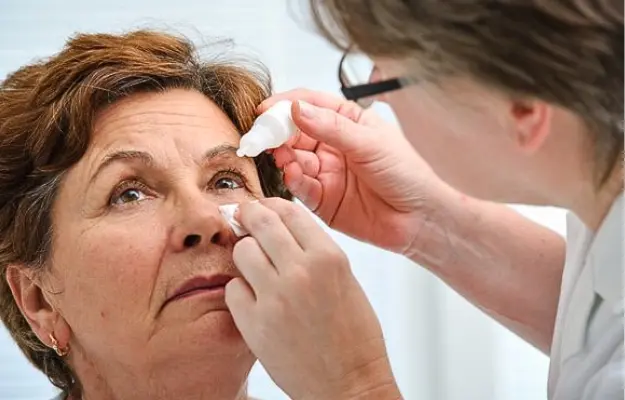
Diagnosing presbyopia is usually straightforward and performed through a comprehensive eye exam at an ophthalmology clinic. If you start noticing that you need to hold books, your phone, or your tablet farther away to see clearly, that's the clearest indication that it's time for a regular eye check-up.
During the examination, your ophthalmologist will typically perform the following steps:
- General Vision Test: This includes testing both distance and near vision to assess your eyes' ability to see at different ranges.
- Accommodation Assessment: The doctor will use specialized instruments to measure your eyes' ability to focus on close-up objects.
- Comprehensive Eye Health Check: This is a crucial part of the general exam. The ophthalmologist will check your intraocular pressure (to screen for glaucoma), examine the back of your eye (retina, optic nerve), and other eye structures. The purpose is to rule out more serious eye conditions that might have similar initial symptoms to presbyopia, such as early cataracts, macular degeneration, or diabetic retinopathy.
After diagnosis, your doctor will determine the degree of your presbyopia and recommend the most suitable treatment or vision correction method to match your needs and lifestyle.
Presbyopia Treatment Solutions
Although presbyopia is a natural and irreversible process, there are many effective methods to correct vision and help you see clearly again. Current presbyopia treatment options are diverse, including:
1. Eyeglasses:
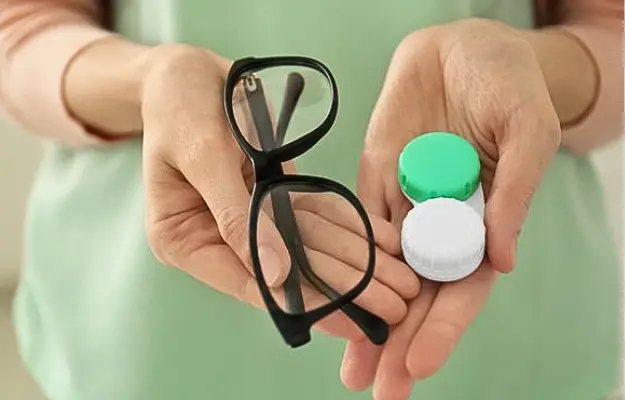
This is the traditional and most common method, with various types of glasses to suit different needs:
- Reading Glasses: This is the simplest option, typically used only when performing near vision activities like reading, working on a computer, or sewing. These glasses have a single focal point for near distances.
- Bifocals: This type of lens has two distinct viewing areas: the upper portion for distance vision and the lower portion for near vision. There is a clear line separating these two zones. Wearers need to learn to move their eyes between the two areas to see clearly.
- Progressive Lenses / Varifocals: These are more modern lenses that offer a smooth and seamless transition between distance, intermediate (e.g., computer screen), and near vision without any visible lines. Progressive lenses provide a more natural and aesthetically pleasing vision, though wearers often need some time to adapt and get used to them.
2. Contact Lenses:
For those who prefer not to wear glasses, contact lenses also offer options for presbyopia:
- Multifocal Contact Lenses: These are specially designed to provide clear vision at multiple distances (far, intermediate, near) on the same lens. There are various designs (e.g., concentric, aspheric), which require the brain and eyes of the wearer to adapt.
- Monovision: This method uses two contact lenses with different powers: one eye is corrected for clear distance vision, and the other eye is corrected for clear near vision. The brain learns to prioritize images from each eye depending on the viewing distance. While suitable for some, this method can cause a reduction in depth perception or discomfort and headaches for others.
3. Refractive Surgery:
For individuals seeking a long-term solution and wishing to eliminate their dependence on glasses or contact lenses, refractive surgery is a worthwhile consideration:
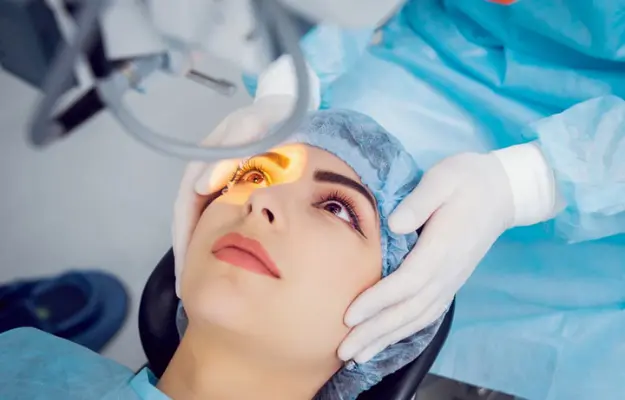
- PRELEX (Presbyopic Lens Exchange) / RLE (Refractive Lens Exchange) Surgery: This is an advanced surgical procedure where your natural, aged lens is replaced with an artificial intraocular lens (IOL). Depending on the chosen lens type, it can be a multifocal IOL or an extended depth of focus (EDOF) IOL.
- Advantages: Provides clear vision at multiple distances (far, intermediate, near), permanently corrects presbyopia, and also prevents future cataracts (as the natural lens is replaced). This method is often recommended for individuals over 50.
- Procedure: Similar to cataract surgery, the surgeon makes a tiny incision in the cornea, removes the natural lens, and inserts the artificial lens into place.
- Monovision LASIK: LASIK surgery can be performed to create a monovision effect, meaning one eye is corrected for optimal distance vision and the other for optimal near vision.
- Corneal Inlays (e.g., Kamra Inlay): A small implant is placed into the cornea of one eye to improve near vision. However, this method is less common and not suitable for all cases.
The Importance of Regular Eye Exams and Advice for Healthy Eyes
If you are experiencing any signs or symptoms of presbyopia, or any changes in your vision, it's crucial to proactively schedule regular eye examinations with an ophthalmologist. This isn't just about accurately diagnosing presbyopia; it also helps detect serious eye conditions early that could lead to significant vision loss, such as cataracts, glaucoma, or macular degeneration. Many of these conditions often have initial symptoms that resemble presbyopia, making a comprehensive examination essential for accurate diagnosis and timely treatment.
Your eyes are incredibly precious senses that help us perceive the world around us. Although presbyopia is a natural part of aging, early recognition and finding the right solution will help you maintain sharp vision, enhance your quality of life, and continue to enjoy your favorite activities without hindrance.
Always listen to your body and do not hesitate to seek advice from eye care professionals if you have any concerns about your vision. Proper eye care starting now will help you maintain healthy, clear vision in the future.