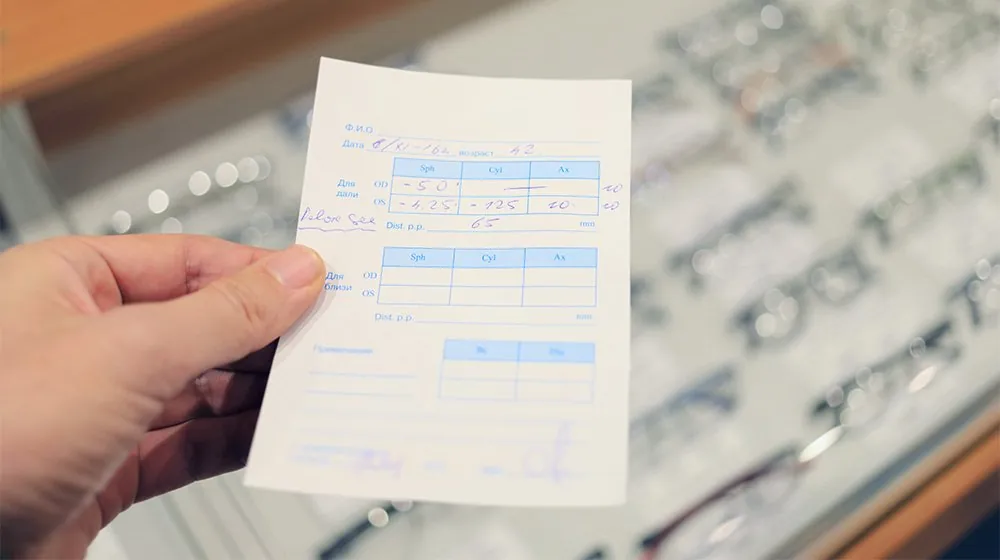
Just visited your eye doctor and received a piece of paper filled with numbers and symbols that look complicated? Don't worry! That's your eyeglass prescription, also known as your Rx, containing all the crucial information about your vision. Understanding your prescription not only empowers you to choose your glasses confidently but also helps you grasp your eye health status.
This article from European Eye Center will guide you on how to read an eyeglass prescription in a detailed, easy-to-understand way, from basic symbols to specialized measurements.
What's an Eyeglass Prescription? Why Should You Know How to Read It?
An eyeglass prescription (or simply an Rx) is a medical document issued by an eye doctor (ophthalmologist) or optometrist after you've had a comprehensive eye exam and vision test. This prescription records specific parameters of your refractive error (such as nearsightedness, farsightedness, astigmatism, presbyopia) and the lens power needed to correct your vision.
Knowing how to read your eyeglass prescription offers many benefits:
- Understand your eye condition: You'll know exactly what type of refractive error you have and its severity.
- Be proactive when buying glasses: Whether it's eyeglasses or contact lenses, you can easily compare and select the correct type of lenses based on your prescription.
- Check the accuracy of your new glasses: You can cross-reference the parameters on your prescription with those on your new glasses to ensure they're made correctly.
- Monitor vision changes: When you have a follow-up exam, you can compare your old and new prescriptions to see if your vision has changed.
Key Terms and Symbols on Your Eyeglass Prescription
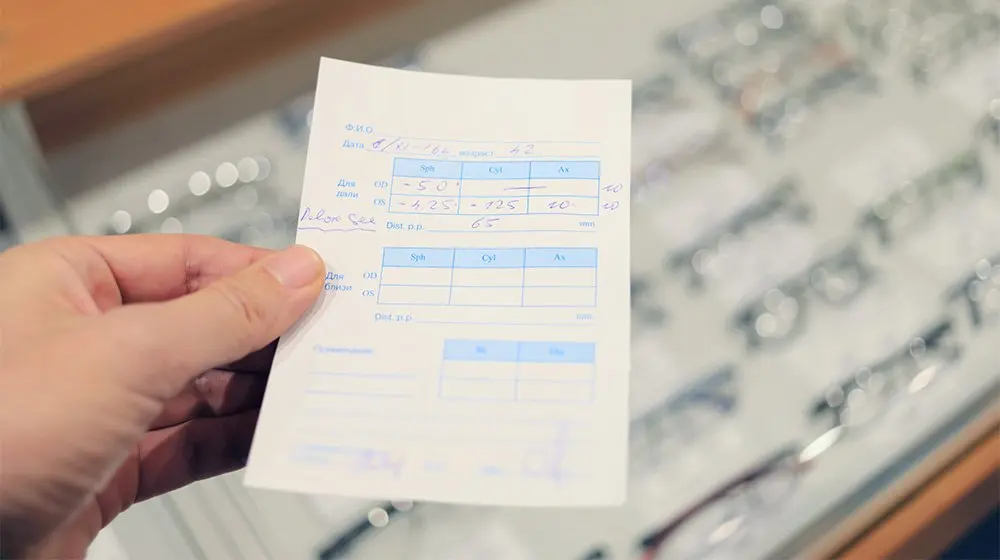
Don't let the abbreviations and numbers confuse you! They all have very clear meanings. Here are the most common terms and symbols you'll find on your eyeglass prescription:
Eye Symbols: OD, OS, OU (or RE, LE)
These are the first symbols you'll see, indicating the parameters for each eye:
- OD (Oculus Dexter): Always refers to your right eye.
- OS (Oculus Sinister): Always refers to your left eye.
- OU (Oculus Uterque): Sometimes used to refer to both eyes.
- RE (Right Eye): Some prescriptions might use RE instead of OD.
- LE (Left Eye): Some prescriptions might use LE instead of OS.
Specific parameters for the right eye will be listed in the OD row, and for the left eye in the OS row.
Sphere (SPH)
SPH stands for "Sphere," representing the optical power of the lens, measured in diopters (D). This parameter is used to correct common refractive errors like nearsightedness or farsightedness.
- A minus sign (-) before the number: Indicates that you are nearsighted (myopia). For example: -2.00 D. The larger the number (further from 0), the stronger the correction needed for nearsightedness.
- A plus sign (+) before the number: Indicates that you are farsighted (hyperopia). For example: +1.50 D. The larger the number (further from 0), the stronger the correction needed for farsightedness.
- If this section is blank or says "PL" (Plano): It means your eye has no nearsightedness or farsightedness, or the degree is too small to require correction.
Example: If your prescription reads OD: SPH -2.50, it means your right eye is nearsighted by 2.5 diopters.
Cylinder (CYL)
CYL stands for "Cylinder," representing the optical power needed to correct astigmatism. Astigmatism occurs when the cornea (the clear front surface of the eye) has an irregular shape, similar to a football instead of a perfectly round sphere, causing distorted vision.
- Always a minus sign (-): The cylinder power is always a negative number on a prescription.
- If this section is blank or says "0" or "SPH": It means your eye has no astigmatism or the astigmatism is too low to require correction.
- The larger the number (further from 0): The more severe the astigmatism.
Example: If your prescription reads OS: CYL -1.00, it means your left eye has 1 diopter of astigmatism.
Axis (AXIS)
AXIS (Axis) is a number ranging from 1 to 180 degrees, indicating the orientation of the astigmatism on the cornea. It specifies the direction in which the cylindrical lens needs to be placed for the most effective astigmatism correction.
- The Axis value only appears when there is a Cylinder (CYL) value. If there's no CYL, there will be no Axis.
- Measured in degrees: No plus/minus signs.
- Numbers 90 and 180 often indicate astigmatism along the vertical or horizontal axis.
Example: If your prescription reads OD: CYL -0.75 Axis 170, it means your right eye has 0.75 diopters of astigmatism at an axis of 170 degrees.
Addition (ADD)
ADD stands for "Addition," representing the additional magnifying power needed for the bottom part of multifocal or bifocal lenses. This parameter corrects presbyopia—the age-related condition that causes difficulty with near vision, typically occurring in people over 40.
- Always a plus sign (+): For example: +1.50 D.
- Usually the same value for both eyes: The ADD power is typically identical for both the right and left eyes.
- Commonly ranges from +0.75 to +3.00 D: Depending on the severity of presbyopia.
If you are younger (under 40) and don't have presbyopia, the ADD section will be blank or not listed.
Prism (PRISM)
PRISM (Prism) is a less common parameter, used to correct vision for individuals experiencing double vision (seeing one object as two) or strabismus (misaligned eyes). A prism lens helps shift the image so that both eyes can see a single image.
- Measured in prism diopters (PD).
- Always accompanied by the prism base direction:
- BU (Base Up): Base oriented upwards
- BD (Base Down): Base oriented downwards
- BI (Base In): Base oriented inwards (towards the nose)
- BO (Base Out): Base oriented outwards (towards the ear)
The Prism parameter will only appear if your eye doctor determines you need it to correct eye misalignment.
>> Read more: Eyeglasses, Ortho-K, or Refractive Surgery: Which Is the Optimal Choice for Myopia?
A Specific Example of How to Read an Eyeglass Prescription
To make it easier to understand, let's look at an example eyeglass prescription and how to read it:
Symbol | SPH | CYL | AXIS | ADD | PRISM |
OD | -2.75 | -0.50 | 90 | +2.00 | 1.0 BD |
OS | -3.00 | -1.25 | 180 | +2.00 |
We'll break down each part as follows:
- Right Eye (OD):
- Is nearsighted by 2.75 diopters (because SPH is -2.75).
- Has 0.50 diopters of astigmatism (because CYL is -0.50) at an axis of 90 degrees (because Axis is 90).
- Has presbyopia requiring an additional +2.00 diopters for near vision (because ADD is +2.00).
- Needs 1.0 prism diopter with the base pointing down (because Prism is 1.0 BD).
- Left Eye (OS):
- Is nearsighted by 3.00 diopters (because SPH is -3.00).
- Has 1.25 diopters of astigmatism (because CYL is -1.25) at an axis of 180 degrees (because Axis is 180).
- Also has presbyopia requiring an additional +2.00 diopters for near vision (because ADD is +2.00).
- Does not need prism (the Prism section is blank).

Important Notes When Receiving and Using Your Prescription
- Always keep your original prescription: Your prescription is an important medical document, so keep it safe.
- Don't buy glasses without a proper prescription: Using glasses with the wrong power can cause eye strain, headaches, and even worsen your vision.
- Ask your doctor immediately if you have questions: Don't hesitate to ask your eye doctor or optometrist if you don't understand any of the parameters on your prescription.
- Prescriptions have an expiration date: An eyeglass prescription is typically valid for 6 months to 1 year. After this period, your vision may change, and you'll need another eye exam to get an updated prescription.
- Don't share prescriptions: An eyeglass prescription is highly personalized. Someone else's prescription might not be suitable and could harm your eyes.
Frequently Asked Questions About Eyeglass Prescriptions (FAQ)
"PL" stands for "Plano," meaning the optical power is zero. This indicates that you are not nearsighted or farsighted in that eye.
Technically, this shouldn't happen. If there's a Cylinder (CYL) value, there must always be an Axis (AXIS) value accompanying it to specify the orientation. Your prescription might have an error, or you should reconfirm with your eye care professional.
No. While SPH, CYL, and AXIS values might be similar, a contact lens prescription requires additional parameters such as lens diameter (DIA) and base curve (BC) to ensure the lens fits correctly and safely on your eye. Furthermore, the refractive power for contact lenses might be slightly adjusted compared to eyeglasses due to their direct contact with the cornea.
It's highly recommended to get another exam. Your vision can change over time, especially in children, adolescents, and older adults. Regular exams ensure you always wear the correct prescription and help detect any underlying eye health issues early.
It depends on your age, eye condition, and risk factors. Generally: * Children and adolescents: Every 6 months to 1 year. * Adults (18-60 years old): Every 1-2 years. * Older adults (over 60) or those with underlying health conditions/family history: Annually or as advised by your doctor.
Conclusion
Understanding your eyeglass prescription is a useful skill that empowers you to take a more active role in caring for and protecting your eyes. With these detailed instructions from European Eye Center, we hope you can now confidently decipher all the numbers and symbols on your prescription.
If you still have any questions about your prescription or need a comprehensive eye exam to get the most accurate one, don't hesitate to contact European Eye Center. Your eyes deserve the best care!