Contact lenses have long been more than just a vision correction solution; they symbolize confidence, dynamism, and comfort for millions worldwide. Unlike eyeglasses, contact lenses offer natural vision, unhindered by frames, weather, or sports activities. However, precisely because of their direct contact with the eyes, contact lenses are surrounded by numerous misconceptions and concerns that are often not fully addressed.
If you are considering experiencing the convenience of contact lenses, or are already a user but still have lingering doubts about common "hearsay," this article is for you. We will debunk the 5 most common myths about contact lenses, providing you with accurate information and greater peace of mind. After all, understanding and proper usage are key to protecting your precious eyes. Let's dive in!
Why Is Debunking Contact Lens Myths So Important?
In this age of information explosion, inaccurate information can cause us to miss out on wonderful solutions or inadvertently harm ourselves. With contact lenses, misconceptions not only cause unnecessary anxiety but also lead to incorrect usage habits, directly affecting vision health. Equipping yourself with accurate knowledge is the best way to safely enjoy the full benefits of contact lenses. Let's delve into each myth to uncover the truth.
1. Myth: Wearing Contact Lenses Permanently Damages Your Eyes
This is perhaps the biggest concern that makes many people hesitant to use contact lenses: can placing an object in the eye cause permanent damage, leading to infections, dry eyes, or long-term vision deterioration?
The truth is: When fitted and instructed by an eye care professional, and when you strictly adhere to usage and hygiene rules, contact lenses are completely safe and do not harm your eyes.
Cases where eye problems arise from contact lens wear typically stem from not following instructions correctly. Issues like red eyes, foreign body sensation, discomfort, or infections can all be prevented if you remember and practice the following:
- Wash hands thoroughly: Always wash your hands thoroughly with soap and water, then dry them with a clean, lint-free towel before touching your lenses or eyes. This is the most crucial foundation for keeping your eyes free from bacteria.
- Use only specialized solutions: Always use specialized contact lens solution as advised by your doctor. Absolutely do not use tap water, bottled water, or saliva to rinse or soak your lenses. Water lacks disinfecting properties and can contain microorganisms that can cause serious eye harm.
- Replace lenses on time: Each type of contact lens has its own "lifespan" (e.g., daily disposable, bi-weekly, monthly). Trying to wear lenses past their expiration date reduces their oxygen permeability and allows protein and bacteria to accumulate, increasing the risk of infection.
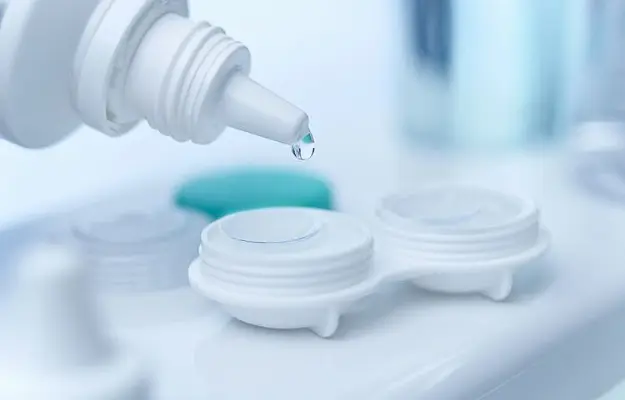
- Care for your lens case: Replace your contact lens case every three months. After each use, discard the old solution, rinse the case with fresh solution, and allow it to air dry naturally. Never "top off" new solution onto old, leftover solution.
- Listen to your eyes: If your eyes feel uncomfortable, red, itchy, excessively watery, or blurry while wearing lenses, remove them immediately. If the condition does not improve, do not hesitate to consult an ophthalmologist as soon as possible.
- Regular eye exams: Even if your eyes feel healthy, regular eye check-ups are essential to ensure your contact lenses are still suitable and your eyes remain in the best possible condition.
Modern contact lenses are made from advanced materials like Hydrogel and Silicone Hydrogel, allowing ample oxygen to pass through the cornea, helping the eyes "breathe" naturally. Their increasingly thin and form-fitting designs provide a comfortable feel. So, don't let unfounded fears prevent you from enjoying the convenience and comfort that contact lenses offer.
>> Read more: All About Contact Lenses: A Complete Guide to Safe and Effective Use
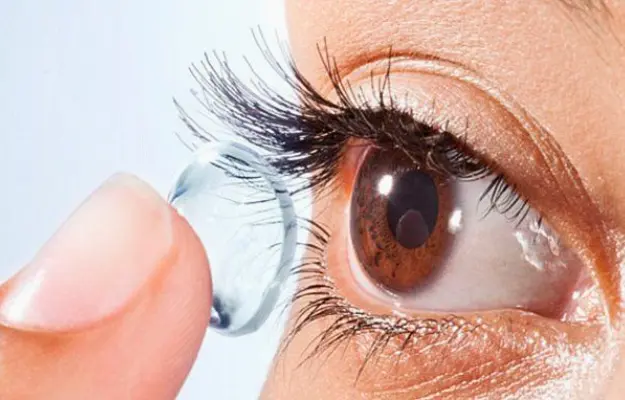
2. Myth: Contact Lenses Can Get Lost Permanently Behind Your Eye
This is one of the more "dramatic" fears that many people imagine when thinking about contact lenses: could the lens slip behind the eyeball and get permanently stuck? This image can make anyone cringe.
The truth is: Contact lenses cannot get permanently lost behind your eyeball.
The reason is simple and lies in the special structure of our eyes. The eye is protected by a thin, transparent membrane called the conjunctiva. This membrane starts from the edge of the clear part of the eye (cornea), covers the entire white part (sclera), and folds back inside the eyelids, forming a closed "pocket."
This conjunctival sac acts as a natural barrier, preventing any foreign object (including a contact lens) from slipping behind the eye and entering other cavities in your head. If a contact lens does move out of its central position, it will always remain within the confines of this sac, and you can absolutely find and remove it gently.
So, what can happen if a lens gets "lost"?
- Shifts up or down under the eyelid: Sometimes, due to vigorous rubbing or dry lenses, it can slide up or down under the eyelid.
- Folds or rolls up: The lens can dry out, wrinkle, and stick to one side of the eye, causing a foreign body sensation or discomfort when blinking.
How to handle a shifted lens:
- Stay calm: Take a deep breath and don't panic. Stress can make it harder to handle.
- Add artificial tears: A few drops of artificial tears will help moisturize the lens and eye, allowing the lens to slide more easily.
- Gently move your eyes: Slowly look up, down, left, and right. This can help the lens move back into its original position automatically.
- Gently massage your eyelids: Close your eye and use a clean finger to gently massage your upper or lower eyelid to help move the lens into an easily accessible position.
- Use a mirror: Use a mirror to observe and locate the lens. After washing your hands thoroughly, you can gently pull your eyelid to find and remove the lens.
In the very rare event that you cannot remove the lens yourself, don't worry, see an ophthalmologist. They have the experience and specialized tools to remove the lens safely, without causing damage to your eye. So, you can be completely assured that your contact lens will never "disappear" into your head!
3. Myth: People with Severe Nearsightedness or Astigmatism Cannot Use Contact Lenses
Another misconception that makes many people with high refractive errors (severe nearsightedness/farsightedness) or astigmatism hesitant about contact lenses is the belief that these products are not suitable for their eye condition. In the past, this might have been true to some extent due to limited technology. But now, everything has changed significantly!
The truth is: With modern technology, contact lenses can effectively correct most cases of nearsightedness, farsightedness, astigmatism, and even presbyopia, regardless of severity.
The contact lens industry has made remarkable strides, offering a wide range of diverse and specialized options to meet complex vision needs:
- For people with severe nearsightedness and farsightedness: Manufacturers have developed contact lenses with a very wide range of powers, capable of accommodating individuals with very high myopia or hyperopia. Now, you no longer have to worry that your prescription is too high for suitable contact lenses.
- For astigmatism: This is a major breakthrough. Contact lenses for astigmatism are called Toric contact lenses. These lenses have a special design with different power zones and a stabilization mechanism (such as marking dots, thicker areas, or prism ballast) that helps the lens maintain its correct axis on the eye, thereby accurately correcting astigmatism and providing sharp, stable vision. Modern toric lenses are much thinner, softer, and more comfortable than before.
- For presbyopia: As we age, our ability to see clearly at close distances decreases (presbyopia). To address this, multifocal contact lenses or bifocal contact lenses have been developed. They feature multiple power zones on a single lens, allowing wearers to see clearly at far, intermediate, and near distances, similar to progressive eyeglasses. This offers incredible convenience, eliminating the need to carry multiple pairs of glasses.
Benefits of using contact lenses for special cases:
- Clearer and more natural vision: Especially with astigmatism, contact lenses move with the eyeball, providing more stable and sharper vision compared to eyeglasses.
- Aesthetics and confidence: Eliminates reliance on thick, heavy eyeglasses, boosting confidence in social interactions and daily activities.
- Freedom of movement: Ideal for sports enthusiasts or those with active lifestyles, no longer worrying about glasses falling off, getting in the way, or fogging up due to sweat.
- Wider field of view: Unrestricted by eyeglass frames, contact lenses offer a much more natural and expansive field of vision.
To find the most suitable type of contact lens, it is crucial to undergo a thorough eye examination by an ophthalmologist or optometrist. They will accurately measure your eye's refractive error, including astigmatism axis if present, and recommend the best type of lens for your eye condition and lifestyle. Do not attempt to purchase and use them without professional consultation!

4. Myth: It's Completely Harmless to Sleep with Contact Lenses On
This is a dangerous yet quite common habit, especially among those who "forget" to remove their lenses or desire maximum convenience. Many mistakenly believe that napping for a few minutes or even sleeping overnight with contact lenses is harmless, or that "extended wear" lenses advertised for overnight use are completely safe.
The truth is: Unless specifically prescribed and closely monitored by your eye doctor, sleeping with contact lenses on is extremely dangerous and significantly increases the risk of serious eye infections.
Why does sleeping with contact lenses pose risks?
- Corneal Hypoxia: The cornea (the clear front part of the eye) receives oxygen directly from the air. When you close your eyes, especially during sleep, the amount of oxygen reaching the cornea is already significantly reduced. A contact lens, even if designed to be gas-permeable, still creates a barrier between the cornea and the air, further reducing oxygen supply to the eye.
- Increased Risk of Eye Infection: Prolonged oxygen deprivation (corneal hypoxia) can lead to corneal swelling, reducing the eye's natural self-protective ability. A weakened and swollen cornea becomes more vulnerable to bacteria, viruses, and fungi – agents that can be present on contact lenses, in solution, or in the environment. The risk of corneal infection (keratitis) increases many times over, potentially leading to corneal ulcers – an extremely serious condition that can cause severe pain, permanent vision loss, or even blindness if not treated promptly.
- Neovascularization: Due to prolonged oxygen deprivation, sometimes new blood vessels can grow into the cornea in an attempt to supply oxygen. This condition can obstruct vision and lead to more severe complications later on.
- Dry Eyes and Discomfort: Contact lenses can dry out and stick tightly to the eye during sleep, causing a gritty sensation, redness, and even minor damage to the corneal surface when you try to remove them.
What about "extended wear contact lenses"?
Some types of contact lenses called "extended wear contact lenses" are designed from silicone hydrogel materials with extremely high oxygen permeability. This allows a greater amount of oxygen to reach the eye even when your eyes are closed. However, wearing these lenses overnight still carries a higher risk than daily wear lenses and must be specifically prescribed and very closely monitored by an ophthalmologist.
Your doctor will thoroughly evaluate your eye condition, discuss your lifestyle, and only permit you to wear contact lenses while sleeping if the benefits significantly outweigh the risks, and you commit to strict adherence to hygiene guidelines and regular follow-up appointments. Even with these types of lenses, the recommendation is still to remove and clean them daily if possible to minimize all risks.
Most important advice: Unless your ophthalmologist has personally prescribed and instructed you, never wear contact lenses while sleeping, even for a short nap. Always prioritize your eye health!

5. Myth: Rinsing Contact Lenses with Plain Water Is Enough for Cleaning
This is a very common and extremely dangerous misconception, often due to a lack of knowledge or carelessness. Many people think that tap water, bottled water, or even saliva can be used as a substitute for specialized solution when rinsing or soaking contact lenses.
The truth is: Only specialized contact lens solution can safely and effectively clean, disinfect, and store contact lenses. Using water (including tap water, distilled water, bottled water) or saliva is a high-risk action that can lead to very serious consequences for your eyes.
Why shouldn't you use water to rinse or soak contact lenses?
- Dangerous Pathogens: Water, no matter how clean, contains countless bacteria, fungi, and parasites like Acanthamoeba. This is an extremely dangerous amoeba that can cause Acanthamoeba keratitis – a rare but very severe eye infection that is difficult to treat and can lead to permanent vision loss. Saliva is similar, containing millions of bacteria from the oral cavity, which can easily infect the eye.
- No Disinfecting Ability: Water has absolutely no ability to effectively disinfect or remove proteins, lipids, and debris accumulated on the lens surface. On the contrary, it can make these substances adhere more tightly, creating a favorable environment for bacteria to multiply.
- Affects Lens Quality: Water has a different osmotic pressure than natural tears. When exposed to water, contact lenses can change shape, swell, or shrink, causing discomfort, compromising the fit, and reducing vision correction effectiveness. Water can also contain minerals or chemicals (like chlorine) that can damage the lens material over time.
Standard contact lens cleaning procedure:
To ensure your eyes stay healthy when wearing contact lenses, strictly follow this cleaning procedure:
- Wash hands thoroughly: Always wash your hands thoroughly with soap and water, then dry them with a clean, lint-free towel before touching your lenses or case.
- Use the correct solution: Only use multipurpose solution or hydrogen peroxide solution recommended by your ophthalmologist. Ensure the solution is within its expiration date and not contaminated.
- Clean the lens case:
- After each lens wear, discard all old solution from the case.
- Rinse the case with fresh, new specialized solution (do not use water).
- Allow the case to air dry naturally (upside down) to prevent bacterial growth in a moist environment.
- Replace your contact lens case every 3 months, or sooner if it becomes dirty or scratched.
- Clean contact lenses (for reusable lenses):
- Place the lens in the palm of your clean hand.
- Apply a few drops of specialized solution onto the lens.
- Gently rub the lens surface in a circular or back-and-forth motion with your finger (for about 10-20 seconds) to remove debris and bacteria.
- Rinse the lens thoroughly with a fresh stream of specialized solution.
- Place the lens in the case filled completely with fresh solution. Ensure the lens is fully submerged.
- Soak the lenses for the minimum time specified on the solution packaging (usually 4-8 hours) to ensure complete disinfection.
Absolute no-nos:
- Using tap water, bottled water, distilled water, saliva, or any other liquid to rinse/soak lenses.
- "Topping off" new solution onto old solution remaining in the case.
- Wearing lenses past their expiry date.
- Sharing contact lenses with others.
Adhering to the correct hygiene procedure is the key to protecting your eyes from dangerous infections and extending the lifespan of your contact lenses. Never trade temporary convenience for your visual health.
Sincere Advice from Eye Care Professionals
After debunking 5 common myths about contact lenses, we hope you now have a clearer and more confident understanding. However, the most important thing you should always remember is:
Contact lenses are medical devices, and their use requires consultation and guidance from an eye care professional.
To ensure absolute safety and fully enjoy the benefits that contact lenses offer, always:
- Seek professional consultation and fitting: Before starting to wear contact lenses, visit an ophthalmologist or optometrist. They will perform a comprehensive eye exam, accurately measure your refractive error, check your corneal health, and advise on the most suitable contact lens type for your eyes and lifestyle. You will also receive detailed instructions on how to safely insert and remove lenses.
- Strictly follow instructions: Always strictly adhere to the wearing schedule, cleaning procedures, storage guidelines, and replacement schedule prescribed by your doctor and recommended by the manufacturer. This is the golden rule for protecting your eyes.
- Regular eye exams: Even if you don't feel any unusual symptoms, have regular eye check-ups (at least every 6-12 months). This helps your eye doctor timely detect and address potential issues early, ensuring your eyes remain healthy and contact lenses remain the optimal choice.
- Always listen to your body: If your eyes show any signs of discomfort such as redness, itching, pain, unusual tearing, or blurry vision while wearing lenses, remove them immediately. Do not try to endure or self-treat. Contact your eye doctor as soon as possible for examination and advice.
- Purchase from reliable sources: Always buy contact lenses from reputable optical stores, eye hospitals, or specialized clinics where professional consultation is available and product quality is guaranteed. Avoid products of unknown origin, as they may not meet medical standards and pose significant risks to your eyes.
Contact lenses are a wonderful tool that helps us achieve clear vision and a more active lifestyle. However, to enjoy these benefits safely, it is crucial that you equip yourself with accurate knowledge and take responsibility for your eyes.
We hope that with the information provided to debunk the 5 common myths about contact lenses, you will feel more confident in choosing and using this product. Always be an informed user and proactively protect your eyes – the windows to your soul!